Activation-Synthesis Hypothesis
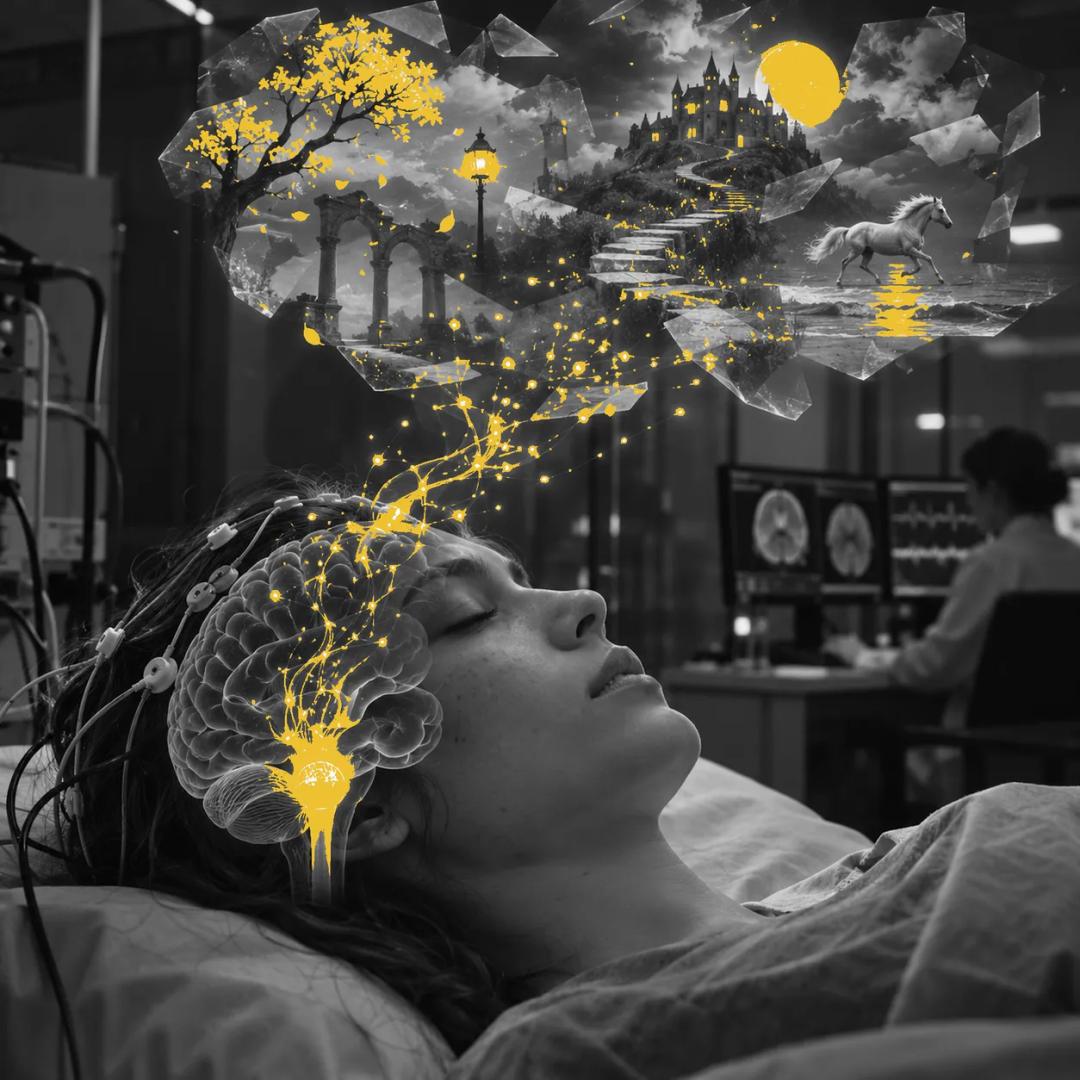
Hobson and McCarley's 1977 proposal that brainstem activity activates the forebrain, which synthesises it with stored memory into a dream.
What it is
The hypothesis holds that dreaming is set off by brainstem mechanisms that periodically activate the forebrain. Bursts of activity in sensory and motor circuits may shape the imagery, and the forebrain makes sense of the activated information by comparing it with what is stored in memory.
In effect
In the article on why we dream, it is the physiological answer that followed the discovery of rapid-eye-movement sleep.
What it does not say
It is a proposal about how dreams are generated. It does not say that dream content carries no meaning for the dreamer, and later findings of dreaming outside rapid-eye-movement sleep changed the picture.
Sources
- Hobson, J. A., & McCarley, R. W. (1977). The brain as a dream state generator: An activation-synthesis hypothesis of the dream process. American Journal of Psychiatry, 134(12), 1335-1348.