Autonomous Sensory Meridian Response
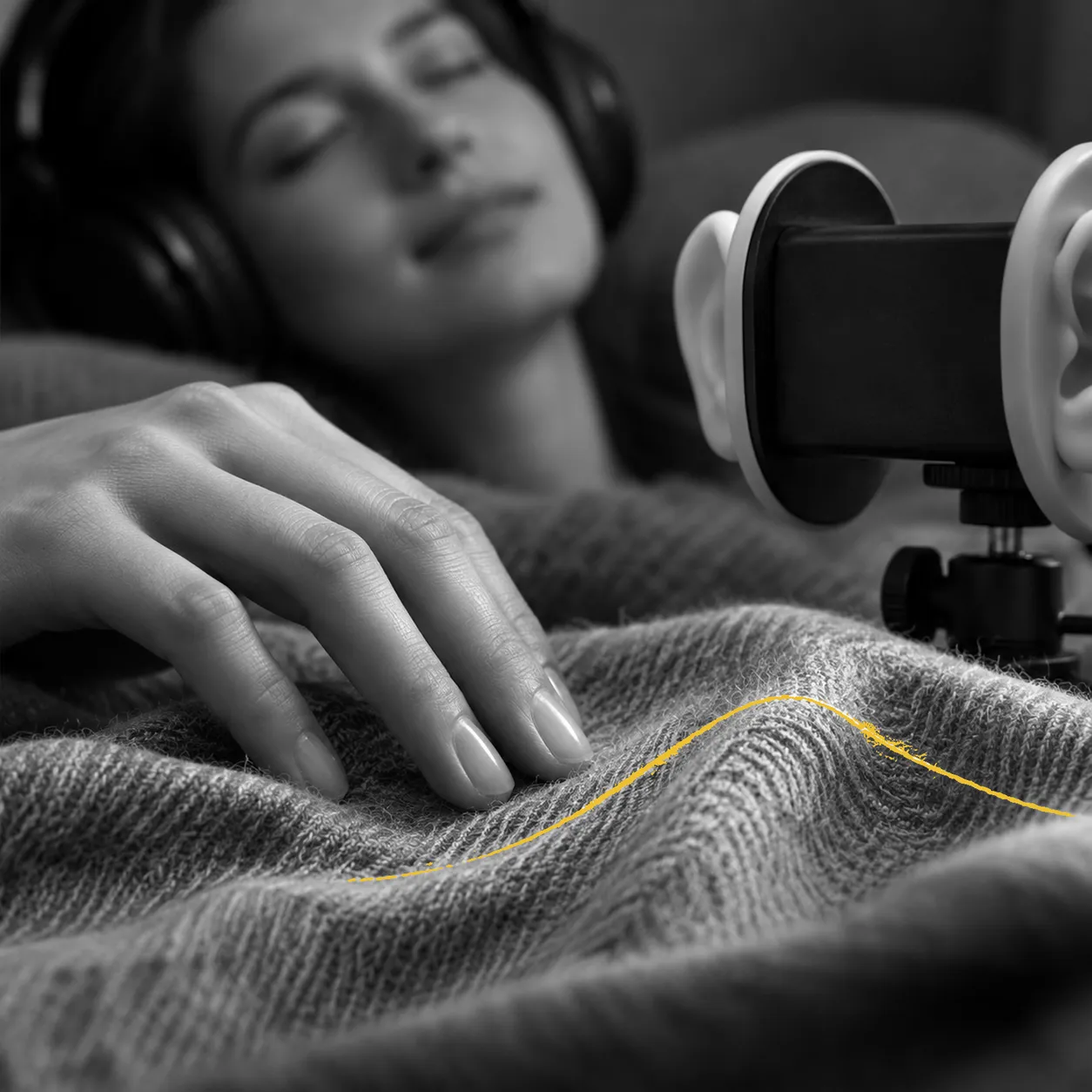
A tingling feeling in the scalp and neck, with a pleasant calm, that some people report in response to soft sounds, light tapping or slow, careful movements.
What it is
Surveys find that whispering, personal attention, crisp sounds and slow movements are the most common triggers. In controlled studies, people who report ASMR feel more tingling and calm during ASMR videos than people who do not, and their heart rate falls more. Brain-imaging studies link tingling moments to reward and arousal regions.
In effect
In the article on why ASMR feels good, it is the experience the studies try to measure, set against the role of expectation and of repetition.
What it does not say
Not everyone experiences it, the studies are small, and the research does not support any health or therapy claim.
Sources
- Barratt, E. L., & Davis, N. J. (2015). Autonomous Sensory Meridian Response (ASMR): a flow-like mental state. PeerJ, 3, e851.
- Poerio, G. L., Blakey, E., Hostler, T. J., & Veltri, T. (2018). More than a feeling: Autonomous sensory meridian response (ASMR) is characterized by reliable changes in affect and physiology. PLoS ONE, 13(6), e0196645.
- Lochte, B. C., Guillory, S. A., Richard, C. A. H., & Kelley, W. M. (2018). An fMRI investigation of the neural correlates underlying the autonomous sensory meridian response (ASMR). BioImpacts, 8(4), 295-304.
- Smith, S. D., Fredborg, B. K., & Kornelsen, J. (2019). A functional magnetic resonance imaging investigation of the autonomous sensory meridian response. PeerJ, 7, e7122.
In these themes
- The Senses
How colour, sound, scent and touch shape what we think of things.