Cart Handles and Purchasing
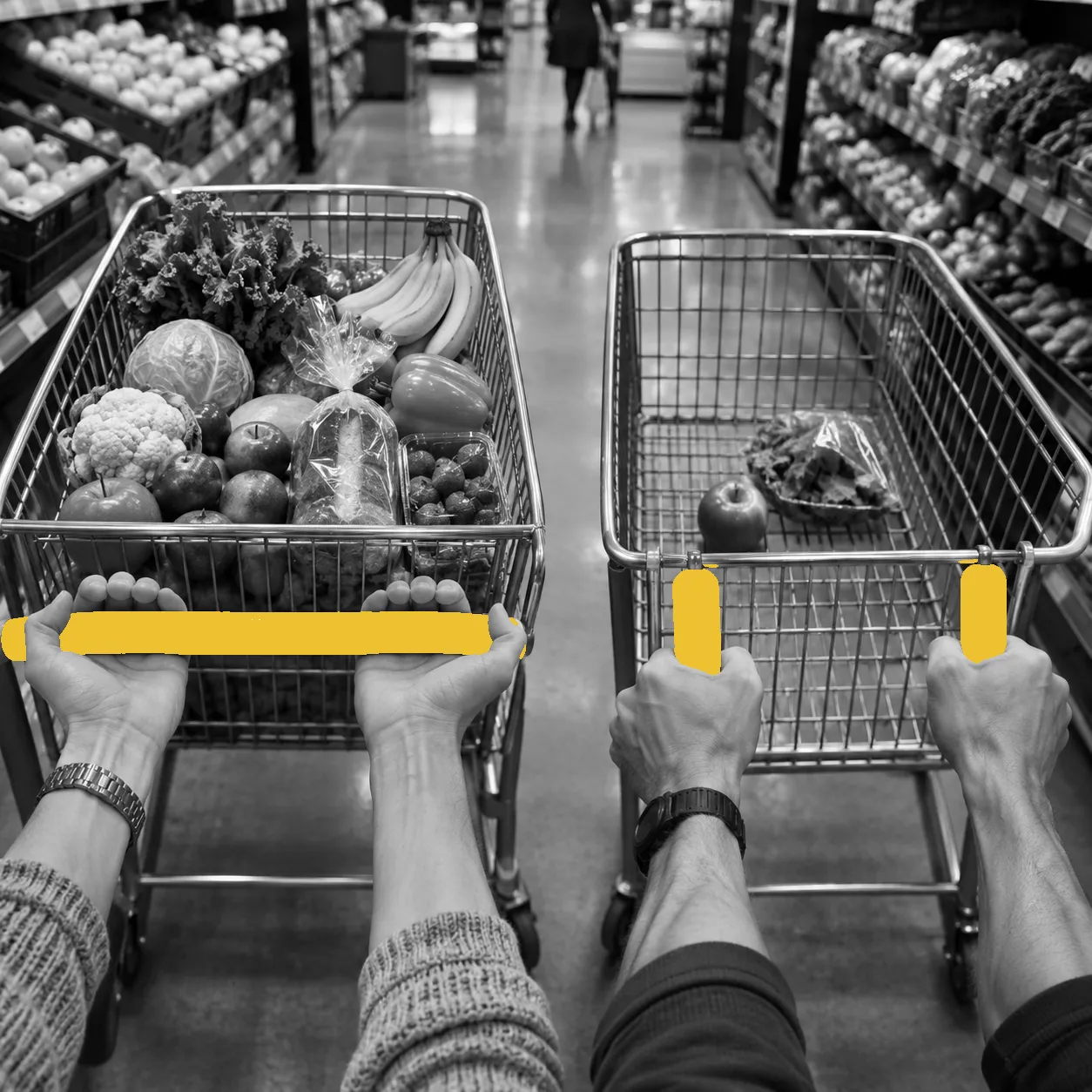
The way a cart's handle makes shoppers hold their arms can change what and how much they buy.
What it is
Estes and Streicher reported in 2022 that standard horizontal cart handles engage the arm extensors while parallel handles engage the flexors, and that in a supermarket field experiment shoppers using parallel-handle carts bought more items, more variety and spent more. The work builds on Van den Bergh, Schmitt and Warlop, who reported in 2011 that arm flexion raised the likelihood of buying vice products and shifted preferences towards smaller, sooner rewards.
In effect
In the article on bigger trolleys, handle design shows that the cart shapes buying through the body as well as through its size.
What it does not say
It does not say a handle alone decides a purchase; the field results come from specific stores and periods.
Sources
- Estes, Z., & Streicher, M. C. (2022). Getting a handle on sales: Shopping carts affect purchasing by activating arm muscles. Journal of Marketing, 86(6), 135-154.
- Van den Bergh, B., Schmitt, J., & Warlop, L. (2011). Embodied myopia. Journal of Marketing Research, 48(6), 1033-1044.
In these themes
- Shopping and Retail
How the shop, the shelf and the checkout shape what ends up in the basket.