Conspicuous Leisure
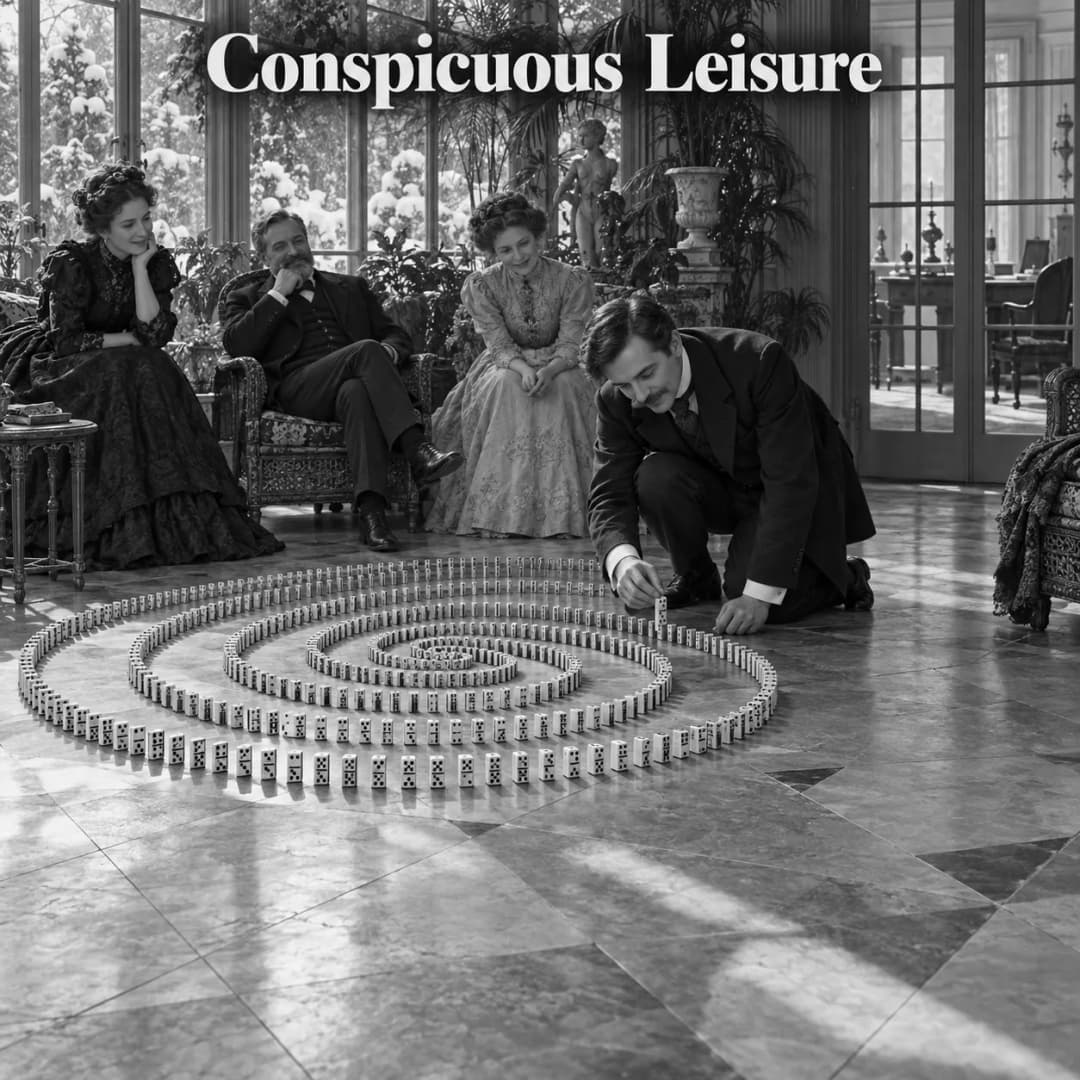
Demonstrating that you do not have to work. Veblen treats this as the older and originally stronger status signal, prior to conspicuous consumption, and the half of his argument that the popular version has dropped entirely.
What it is
Chapter three of The Theory of the Leisure Class, immediately before the chapter on conspicuous consumption, and the sequence carries the argument.
The display is of exemption from productive work: time visibly not spent earning, and the manners, pursuits and accomplishments that take time to acquire and serve no practical purpose. The signal is credible for the same reason a costly signal generally is, because it cannot be produced by somebody who needs to work.
Its limitation is audience. Knowing how somebody spends their day requires knowing them, or at least sharing a place with them. Veblen's account of why visible buying eventually overtakes visible idleness turns on that limitation: as populations become urban, mobile and anonymous, the signal that works on strangers wins.
In effect
The mechanism did not disappear, it changed form, and the modern versions are easy to spot once the original is clear. Displays of unhurriedness, of hobbies that take years, of travel without an obvious purpose, all communicate the same exemption to an audience that can read them.
The interesting contemporary case is the inversion, where visible busyness rather than visible idleness is the status claim. That is a real phenomenon with its own literature, and it is worth noting that it reverses Veblen's sign rather than refuting his mechanism: what is being displayed is still something a person is claiming not to have to do, in this case rest.
What it does not say
It does not say leisure signalling is obsolete. Veblen's claim is that it loses ground to consumption among strangers, not that it stops operating among people who know each other.
It does not supply a measurement. Like the rest of the book, this is observation and argument from 1899, and nothing here is an effect size.
And the busyness inversion above is our observation rather than Veblen's, offered as a connection and not as something he argued.
Sources
- Veblen, T. (1899). The Theory of the Leisure Class. Chapter 3, read directly and in full from the primary text in this vault, 20 September 2026. The ordering of chapters 3 and 4, and the argument that anonymity shifts the signal, are both from that read.