Contingency in Conditioning
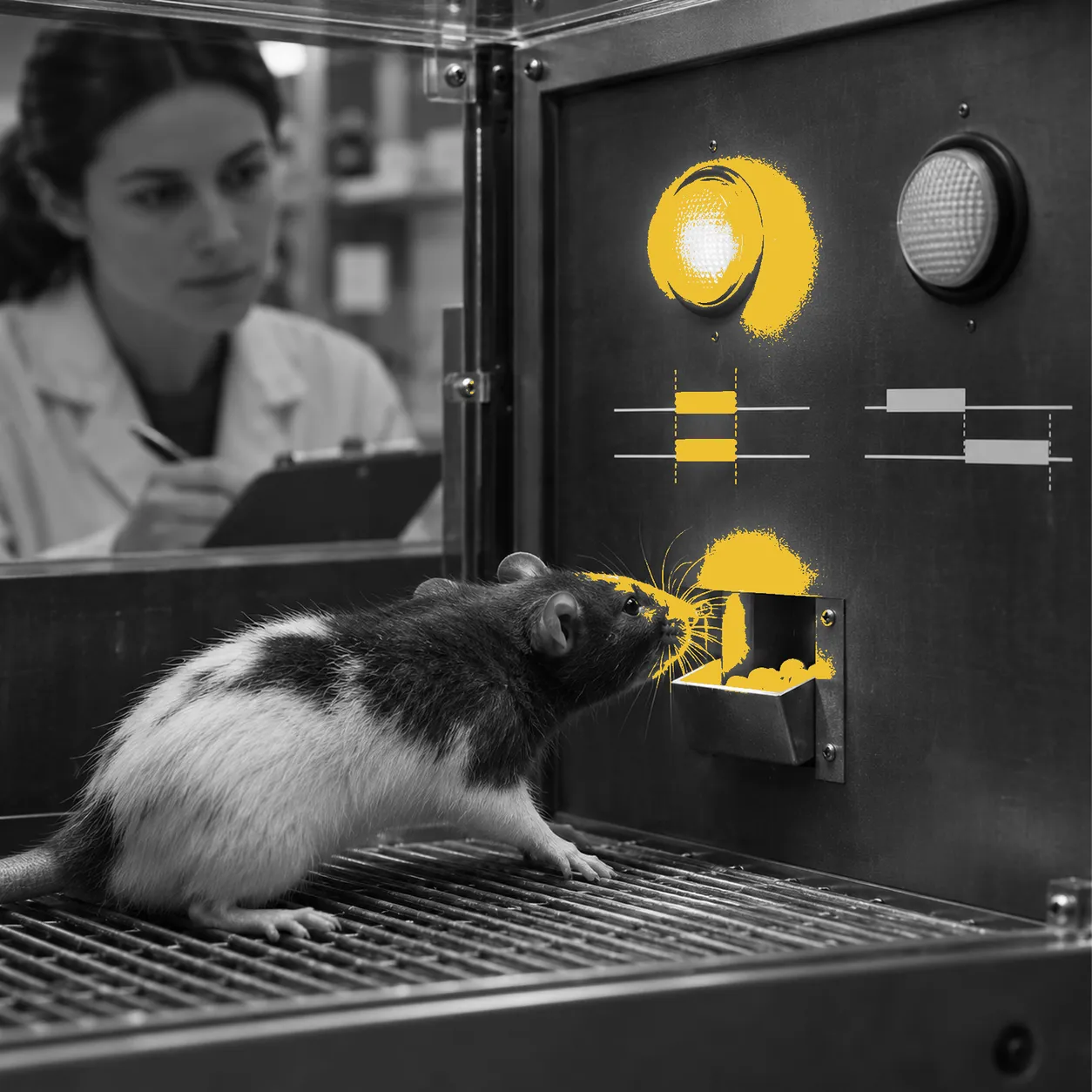
The relation between how likely an event is when a signal is present and how likely it is when the signal is absent.
What it is
In Rescorla's 1968 experiments, brief shocks that were equally likely with and without a tone produced no conditioning to the tone, while the same shocks given only during the tone produced substantial conditioning. Conditioning rose with the chance of the event during the signal, fell with its chance without the signal, and was absent when the two were equal, even though signal and event had met many times.
In effect
In the article on classical conditioning, it shows that a signal is learned because it predicts something, not merely because it accompanies it.
What it does not say
The experiments used fear conditioning in animals. It does not say that pairing never matters, only that pairing without prediction produced no conditioning in these designs.
Sources
- Rescorla, R. A. (1968). Probability of shock in the presence and absence of CS in fear conditioning. Journal of Comparative and Physiological Psychology, 66(1), 1-5.