Delay of Gratification
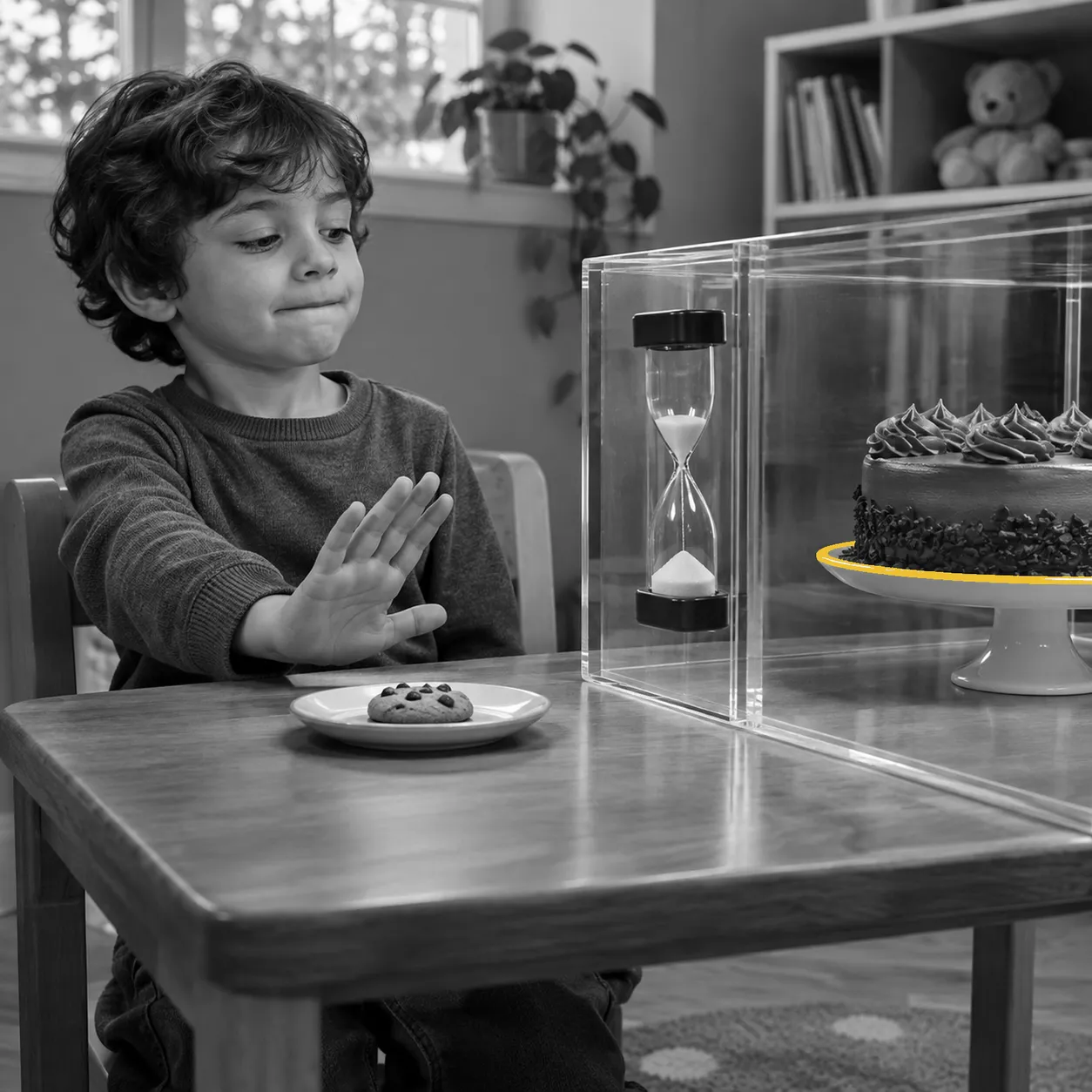
Choosing to wait for a larger later reward over a smaller immediate one.
What it is
In the preschool waiting studies led by Walter Mischel, a child is offered one treat now or a larger one after a wait, and the researchers varied what the child could see and think about during the wait. Waiting time has been linked to later competence in some samples, with a much smaller link once family background is counted, and it also moves with what a child expects from the adult.
In effect
In the article on whether the marshmallow test predicts success, hiding the treat and keeping promises both lengthened waits.
What it does not say
It describes a choice in a given setting, not a fixed trait, and it is not a measure of a person's worth or future.
Sources
- Shoda, Y., Mischel, W., & Peake, P. K. (1990). Predicting adolescent cognitive and self-regulatory competencies from preschool delay of gratification: Identifying diagnostic conditions. Developmental Psychology, 26(6), 978-986.
- Watts, T. W., Duncan, G. J., & Quan, H. (2018). Revisiting the marshmallow test: A conceptual replication investigating links between early delay of gratification and later outcomes. Psychological Science.
- Wood, W. Good Habits, Bad Habits.