Fading Affect Bias
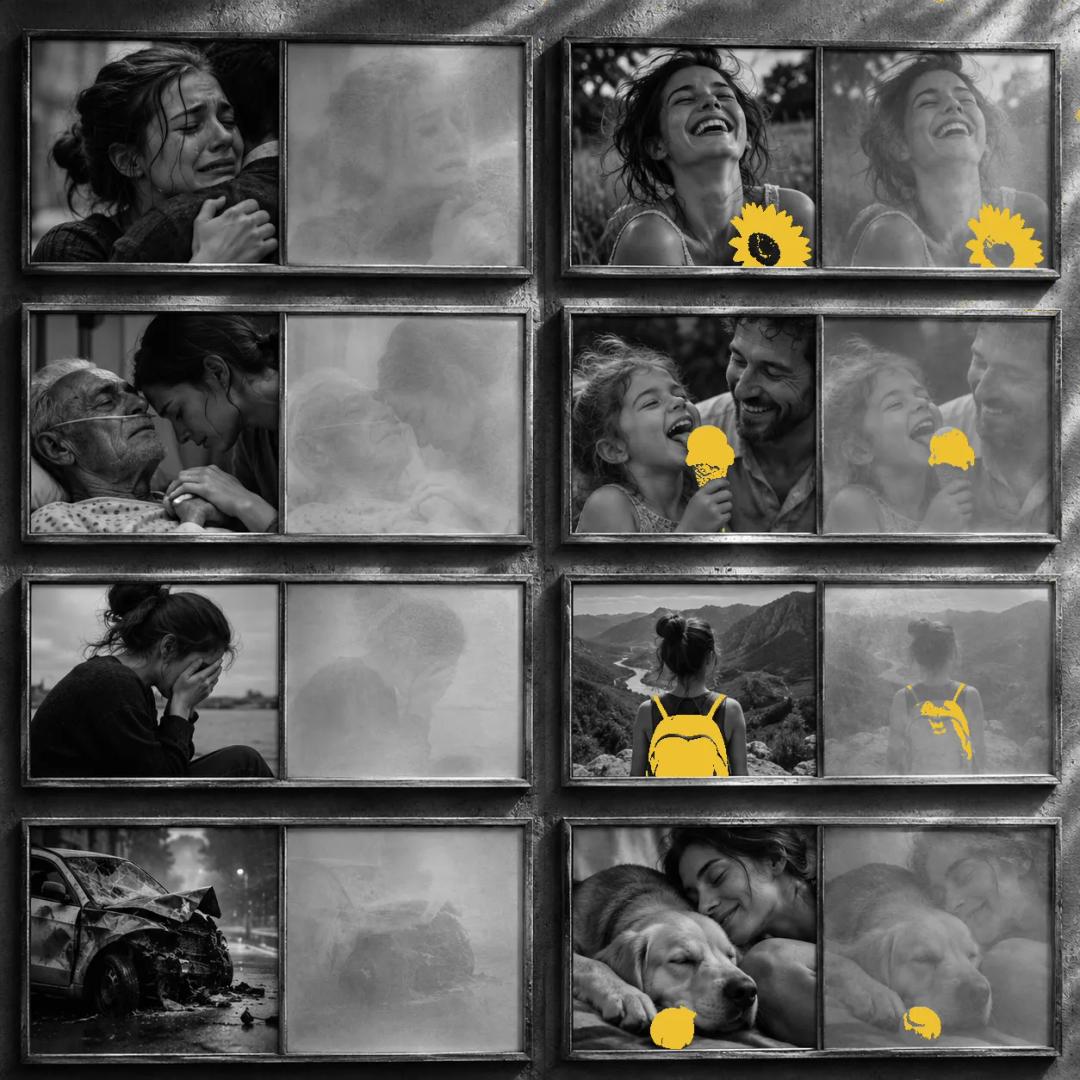
The emotional sting of bad memories fades faster than the glow of good ones.
What it is
Walker, Vogl and Thompson reported in 1997 that ratings of unpleasant personal events became less extreme over intervals of up to four and a half years, and that the shift was larger than for pleasant events. Gibbons, Lee and Walker found the bias one day after an event and still present three months later, and Ritchie and colleagues found it in every sample of 562 participants from 10 cultures.
In effect
In the article on why bad memories fade faster, the bias is walked through from its first report to what strengthens it, ending on the finding across cultures.
What it does not say
It does not mean bad events are forgotten or that every unpleasant memory softens; it concerns the feeling attached to a memory, and the bias was small for events seen as self-important or self-caused.
Sources
- Walker, W. R., Vogl, R. J., & Thompson, C. P. (1997). Autobiographical memory: Unpleasantness fades faster than pleasantness over time. Applied Cognitive Psychology, 11(5), 399-413.
- Walker, W. R., Skowronski, J. J., & Thompson, C. P. (2003). Life is pleasant, and memory helps to keep it that way! Review of General Psychology, 7(2), 203-210.
- Gibbons, J. A., Lee, S. A., & Walker, W. R. (2011). The fading affect bias begins within 12 hours and persists for 3 months. Applied Cognitive Psychology, 25(4), 663-672.
- Ritchie, T. D., Batteson, T. J., Bohn, A., Crawford, M. T., Ferguson, G. V., Schrauf, R. W., Vogl, R. J., & Walker, W. R. (2015). A pancultural perspective on the fading affect bias in autobiographical memory. Memory, 23(2), 278-290.
- Walker, W. R., & Skowronski, J. J. (2009). The fading affect bias: But what the hell is it for? Applied Cognitive Psychology, 23(8), 1122-1136.