Gell-Mann Amnesia
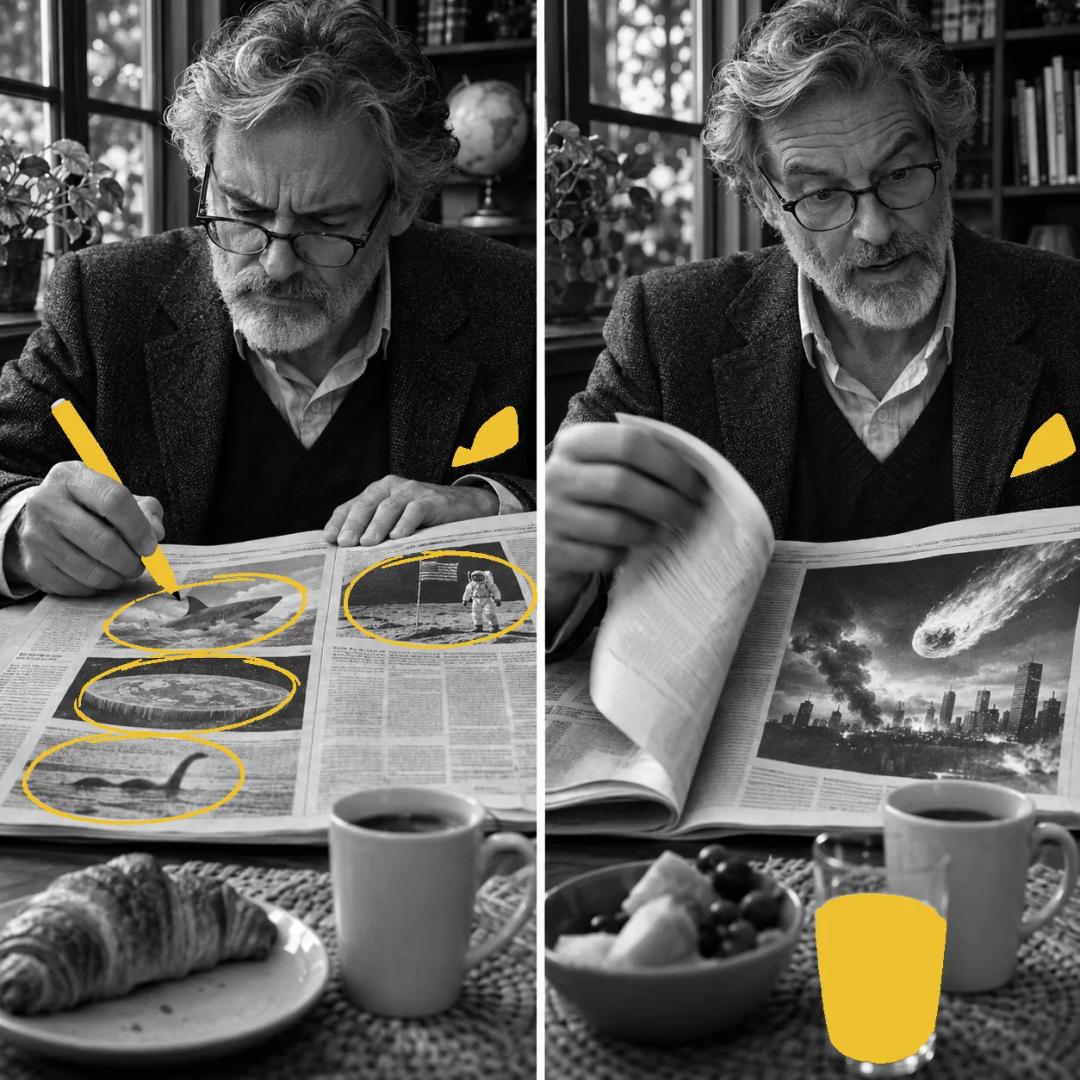
Spotting errors in a news story about one's own field, then trusting the same source on everything else.
What it is
The novelist Michael Crichton named the pattern in a 2002 speech after the physicist Murray Gell-Mann. A reader who knows a subject well notices mistakes in coverage of it, then turns the page and reads coverage of other subjects as though it were reliable. The term is an observation and a label, not a finding from a controlled study.
In effect
In the article on Gell-Mann amnesia, the label is set beside research on how errors shape trust in news, how repetition makes statements feel true even against prior knowledge, and how expert fact checkers judge a source by reading about it elsewhere.
What it does not say
It is not a measured effect with its own experimental literature, and it does not claim that news coverage is usually wrong; it describes a gap between how readers treat subjects they know and subjects they do not.
Sources
- Crichton, M. (2002). Why Speculate? Speech given in La Jolla, California, 26 April 2002.
- Maier, S. R. (2005). Accuracy matters: A cross-market assessment of newspaper error and credibility. Journalism & Mass Communication Quarterly, 82(3), 533-551.
- Fazio, L. K., Brashier, N. M., Payne, B. K., & Marsh, E. J. (2015). Knowledge does not protect against illusory truth. Journal of Experimental Psychology: General, 144(5), 993-1002.
- Wineburg, S., & McGrew, S. (2019). Lateral reading and the nature of expertise: Reading less and learning more when evaluating digital information. Teachers College Record, 121(11), 1-40.
In these themes
- Trust and Credibility
How we decide whom and what to believe.