Graphic Health Warnings
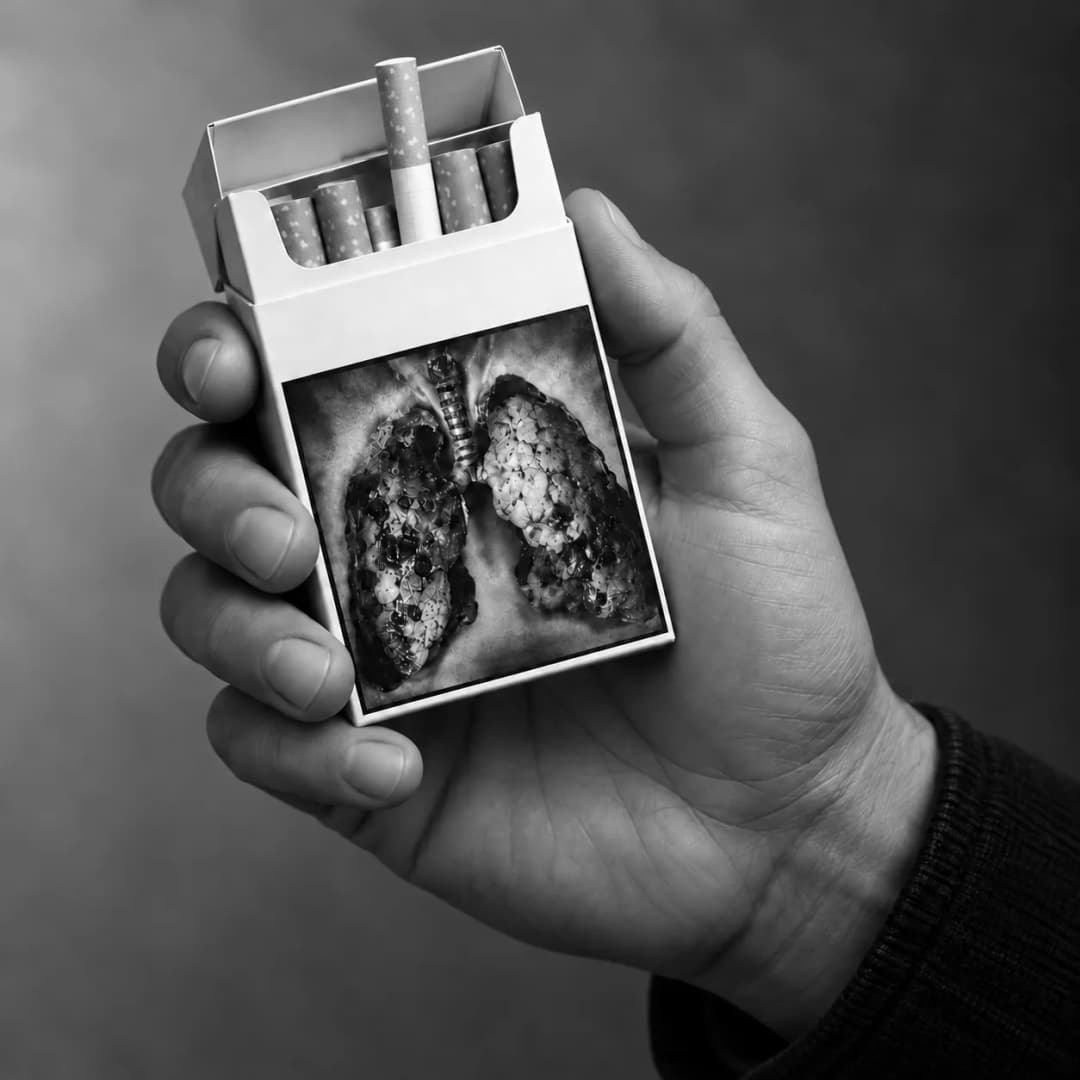
Graphic health warnings are pictures of the harms of smoking printed on cigarette packs. Across experimental studies they outperform text-only warnings on most measures, and in a randomised trial they modestly raised quit attempts. This page is general information, not medical advice.
What it is
A 2016 meta-analysis led by Seth Noar pooled 37 experimental studies with 33,613 participants. Pictorial warnings beat text-only warnings on 12 of 17 effectiveness measures, including attention, emotional reactions, negative attitudes to smoking, and intentions to quit or not to start. The studies mostly lacked measures of actual smoking.
The same year a randomised trial led by Noel Brewer gave 2,149 adult smokers pictorial or text-only warnings on their own packs for four weeks. Forty per cent of those with pictorial warnings tried to quit, against 34 per cent with text warnings; 5.7 per cent against 3.8 per cent had stopped for at least a week by the end.
Brain-imaging studies published in 2015 found graphic warnings associated with reduced urges to smoke, the opposite of a widely repeated claim in Martin Lindstrom's Buyology, whose own study was not published in a peer-reviewed journal.
In effect
Warnings work mainly through emotion: those that provoke strong reactions tend to be more effective, according to a 2011 review of 94 studies by David Hammond. The effects on behaviour are real and modest.
What it does not say
It does not show that warnings alone make people stop smoking for good. The trial lasted four weeks and did not follow people for years.
It does not replace treatment. Stop-smoking services, nicotine replacement and prescribed medicines have their own evidence, and a GP or pharmacist is the right person to discuss them.
Sources
- Noar, S. M., and colleagues (2016). Tobacco Control, 25(3), 341-354. doi:10.1136/tobaccocontrol-2014-051978.
- Brewer, N. T., and colleagues (2016). JAMA Internal Medicine, 176(7), 905-912. doi:10.1001/jamainternmed.2016.2621.
- Hammond, D. (2011). Tobacco Control, 20(5), 327-337. doi:10.1136/tc.2010.037630.
- Wang, A.-L., and colleagues (2015). Tobacco Control, 24(3), 225-232. doi:10.1136/tobaccocontrol-2014-051993.