Hot Hand Fallacy Fallacy
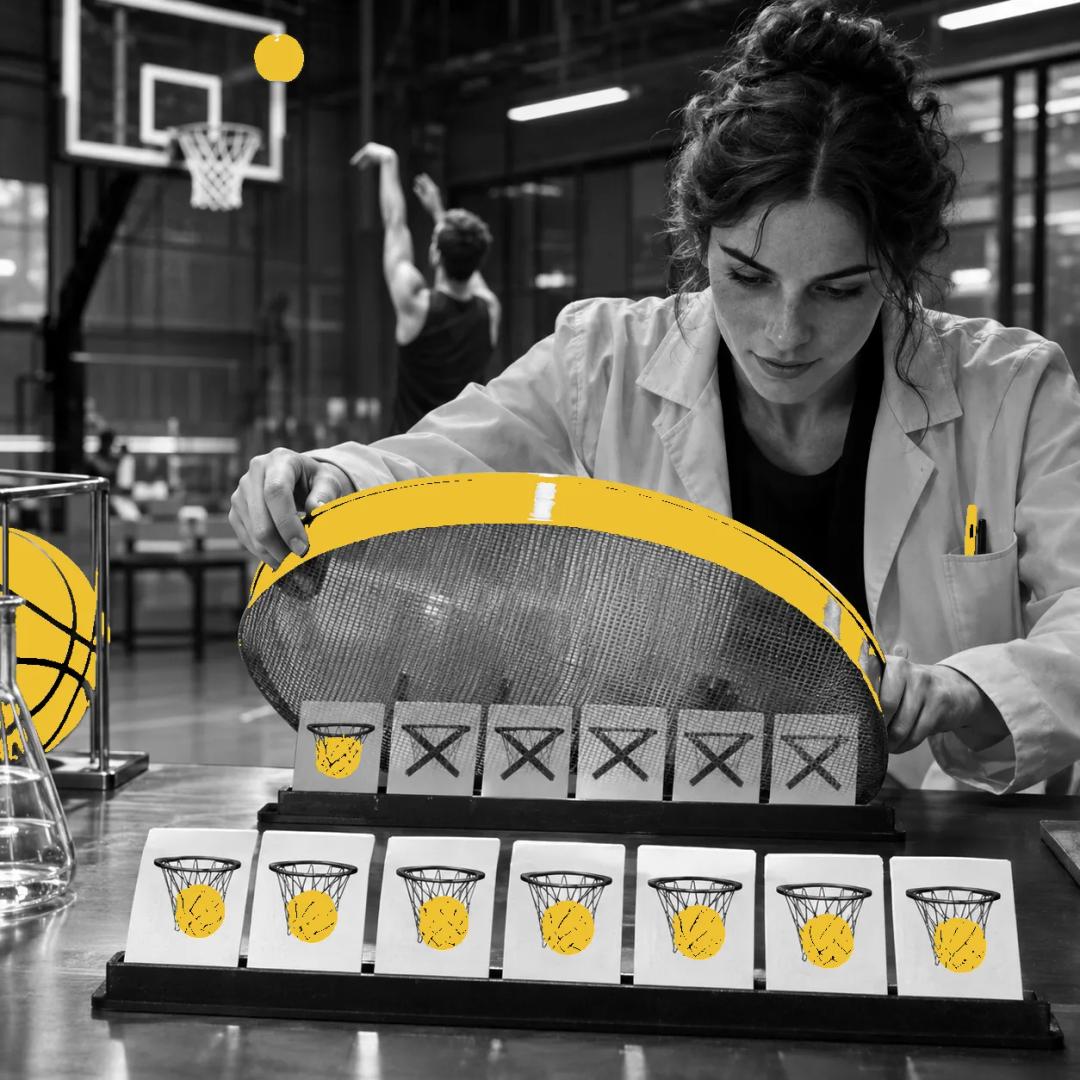
A later reanalysis found that a common test for streaks was biased against finding them.
What it is
Gilovich, Vallone and Tversky reported in 1985 that basketball shooting sequences looked consistent with chance, although most fans believed in a hot hand. In 2018 Miller and Sanjurjo showed that a common measure of dependence after streaks carries a selection bias: in three flips of a fair coin, the average share of heads after a head is five in twelve, not one half. After correcting for it, they found a hit rate about 13 percentage points higher after three hits than after three misses in controlled shooting data.
In effect
In the article on whether the hot hand is real, the reanalysis is the turning point: a method point about how streaks are measured that reopened the question.
What it does not say
It does not show that every belief in streaks is justified; it shows that the size of a streak effect depends on how it is measured.
Sources
- Gilovich, T., Vallone, R., & Tversky, A. (1985). The hot hand in basketball: On the misperception of random sequences. Cognitive Psychology, 17(3), 295-314.
- Miller, J. B., & Sanjurjo, A. (2018). Surprised by the hot hand fallacy? A truth in the law of small numbers. Econometrica, 86(6), 2019-2047.