Jealousy
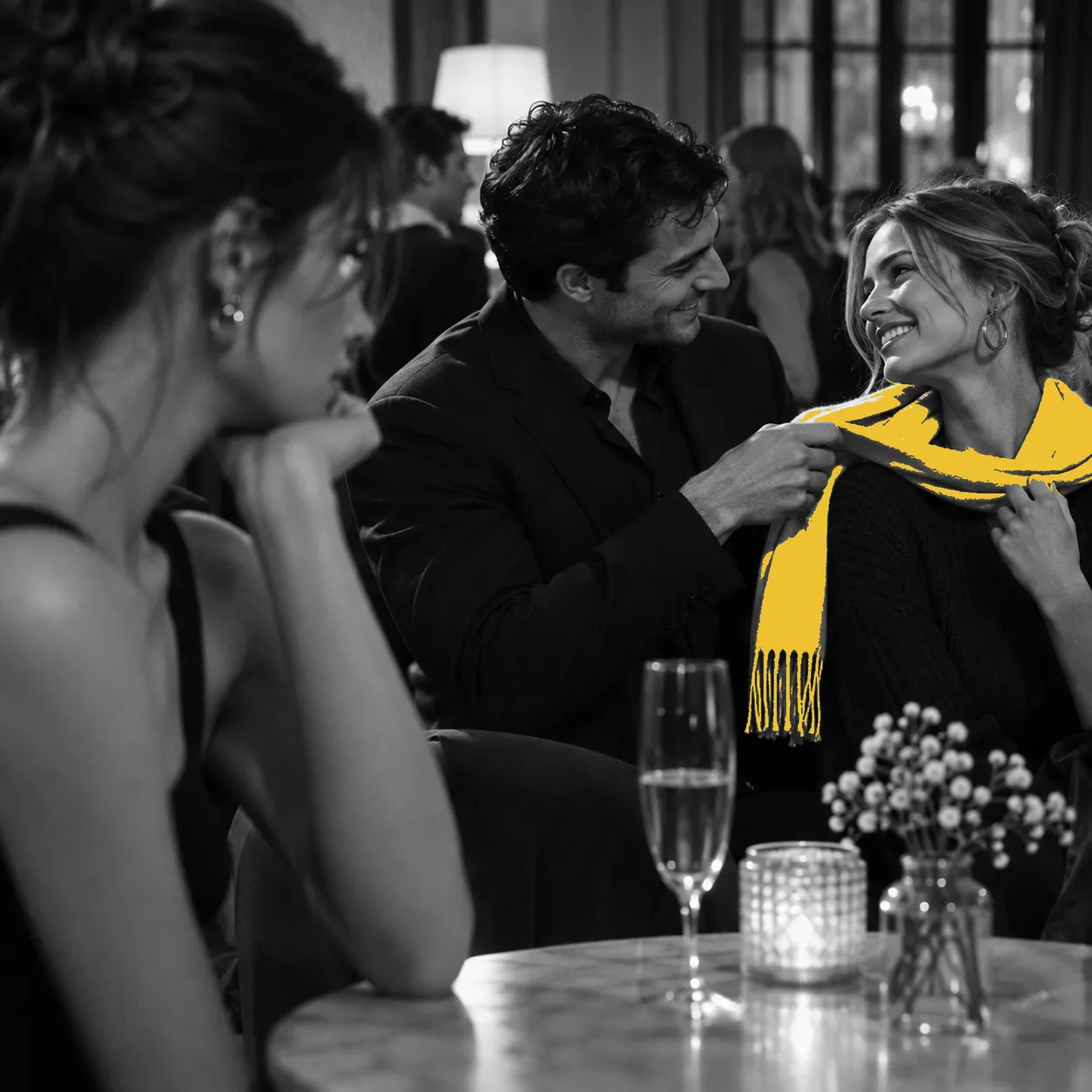
The feeling that a valued bond or share of attention is moving toward a rival, seen in experiments from infancy onward.
What it is
Jealousy concerns something a person already has and may lose to someone else. Sybil Hart and Heather Carrington found that six-month-old infants reacted more negatively when their mothers attended to a lifelike baby doll than to a book, and Christine Harris and Caroline Prouvost found that dogs tried to get between their owners and a realistic stuffed dog. Both teams read these reactions as a basic form of jealousy.
In effect
In the article on why we feel jealous, it is the core feeling, traced from infancy and other animals to adult relationships and social networks.
What it does not say
It is an everyday emotion about relationships and attention. It does not describe or excuse controlling behaviour, and the infant and animal studies show early forms rather than adult jealousy.
Sources
- Hart, S., & Carrington, H. (2002). Jealousy in 6-month-old infants. Infancy, 3(3), 395-402.
- Harris, C. R., & Prouvost, C. (2014). Jealousy in dogs. PLoS ONE, 9(7), e94597.
- Utz, S., & Beukeboom, C. J. (2011). The role of social network sites in romantic relationships: Effects on jealousy and relationship happiness. Journal of Computer-Mediated Communication, 16(4), 511-527.