Large-Scale Decoding
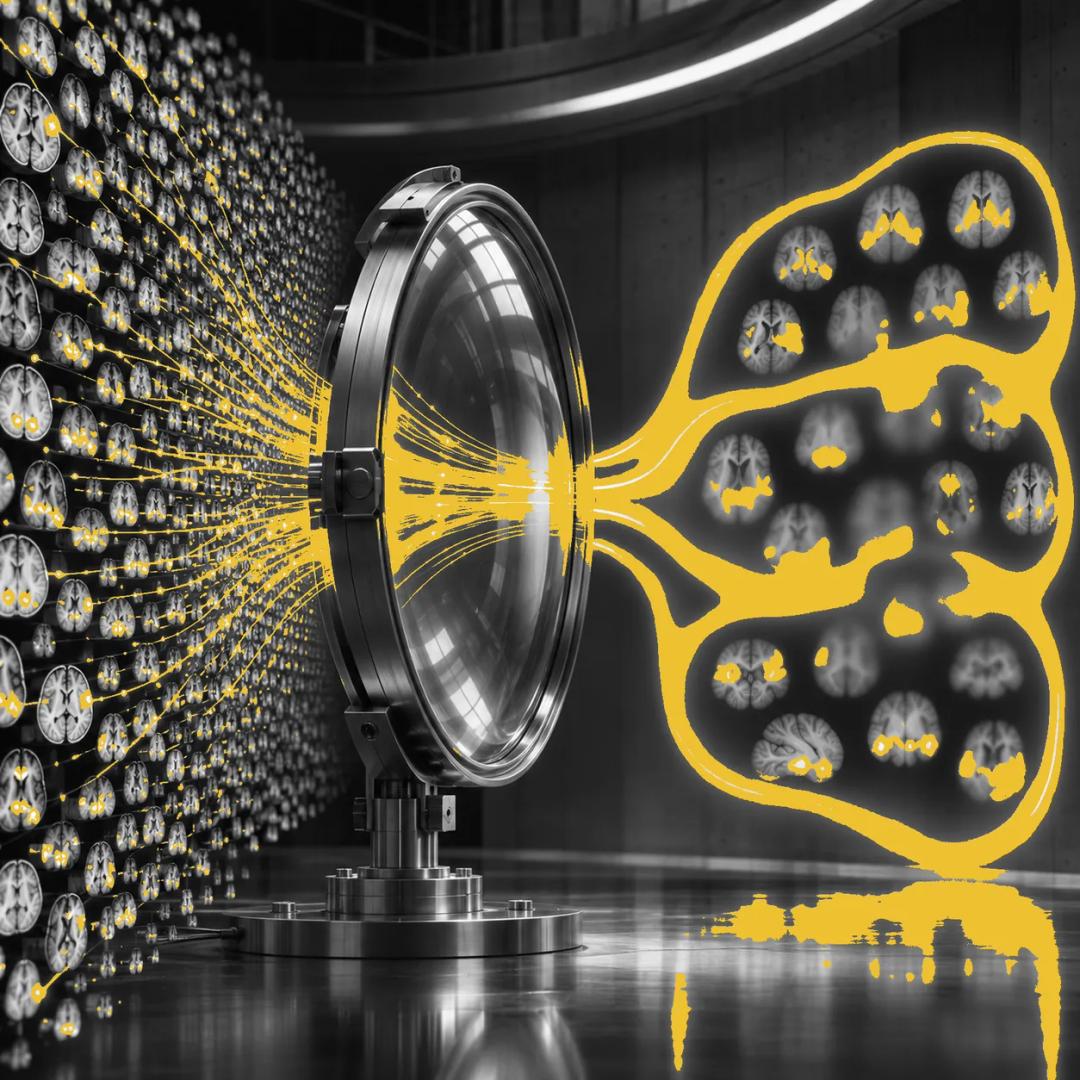
Using patterns of activity pooled from many studies to estimate which mental process an activation map reflects.
What it is
In the 2011 synthesis of 3,489 studies, a classifier recovered the task type from single activation maps at better than chance for working memory, emotion and pain, and separated broad concepts at about 72 per cent mean pairwise accuracy, but could not tell closely related terms apart.
In effect
In the article on reverse inference in neuroscience, it is the step that turned selectivity into a number, later applied to the insula in a study that linked three subregions to distinct functions.
What it does not say
Decoding worked for broad categories and not for closely related ones. It does not read a single person's thoughts from a scan.
Sources
- Yarkoni, T., Poldrack, R. A., Nichols, T. E., Van Essen, D. C., & Wager, T. D. (2011). Large-scale automated synthesis of human functional neuroimaging data. Nature Methods, 8(8), 665-670.
- Chang, L. J., Yarkoni, T., Khaw, M. W., & Sanfey, A. G. (2013). Decoding the role of the insula in human cognition: Functional parcellation and large-scale reverse inference. Cerebral Cortex, 23(3), 739-749.