Moral Credits and Moral Credentials
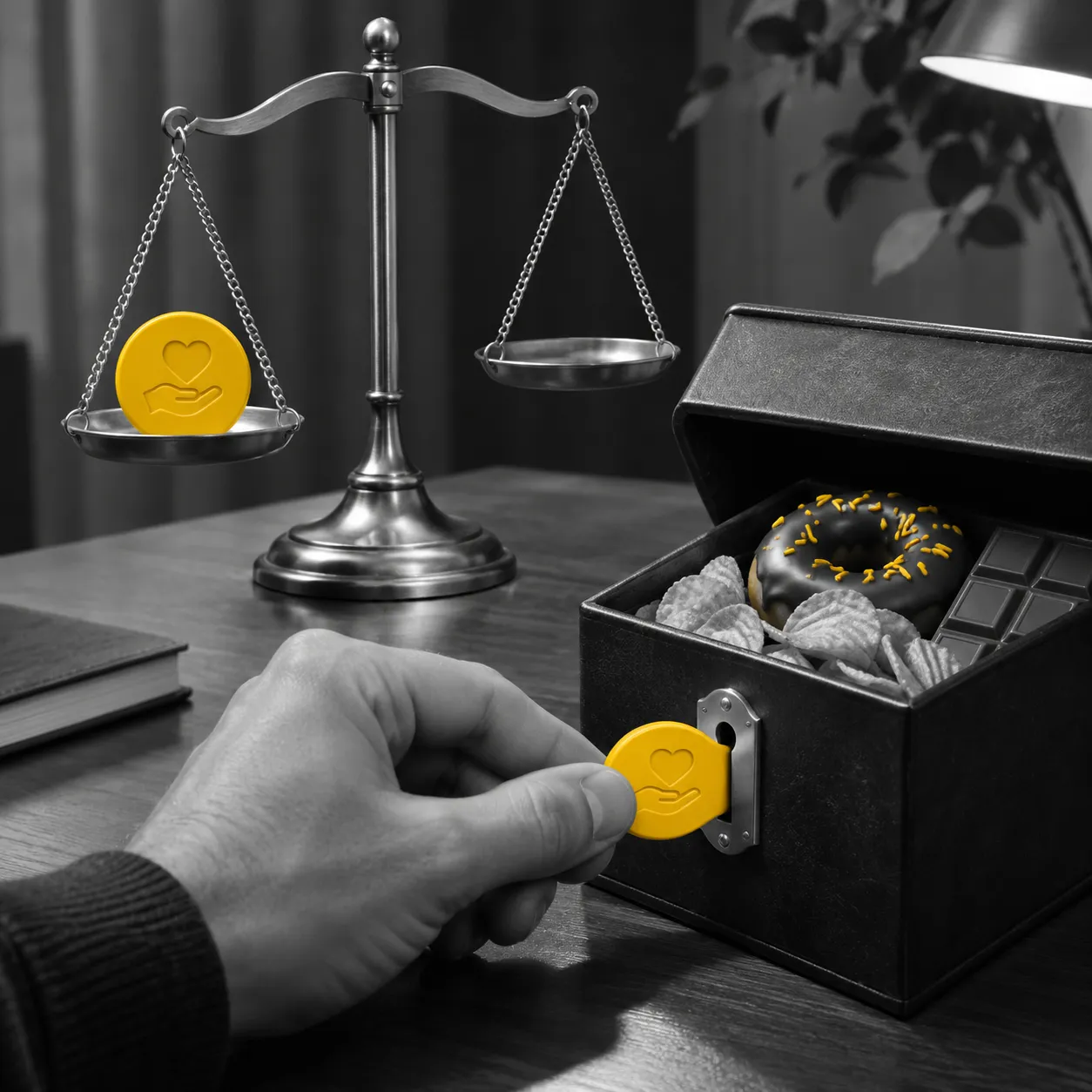
Two accounts of how a good deed gives permission for a later lapse.
What it is
On the credit account a good act is banked and a later lapse is set against it, so the books balance. On the credential account a good act changes how the later choice reads, so what would have looked like a lapse no longer does. Merritt, Effron and Monin reviewed moral self-licensing research in 2010 and named the choice between the two accounts as an unresolved tension.
In effect
In the article on the good deed that licenses the splurge, the two accounts describe the two ways an earlier virtue can make a treat feel allowed.
What it does not say
It does not say which account is right; at the till the two can look identical, which is part of why they are hard to separate.
Sources
- Merritt, A. C., Effron, D. A., & Monin, B. (2010). Moral self-licensing: When being good frees us to be bad. Social and Personality Psychology Compass, 4(5), 344-357.
- Khan, U., & Dhar, R. (2006). Licensing effect in consumer choice. Journal of Marketing Research, 43(2), 259-266.
In these themes
- Impulse and Self-Control
Why we give in, how we feel afterwards, and what helps.