Personal Belief in a Just World
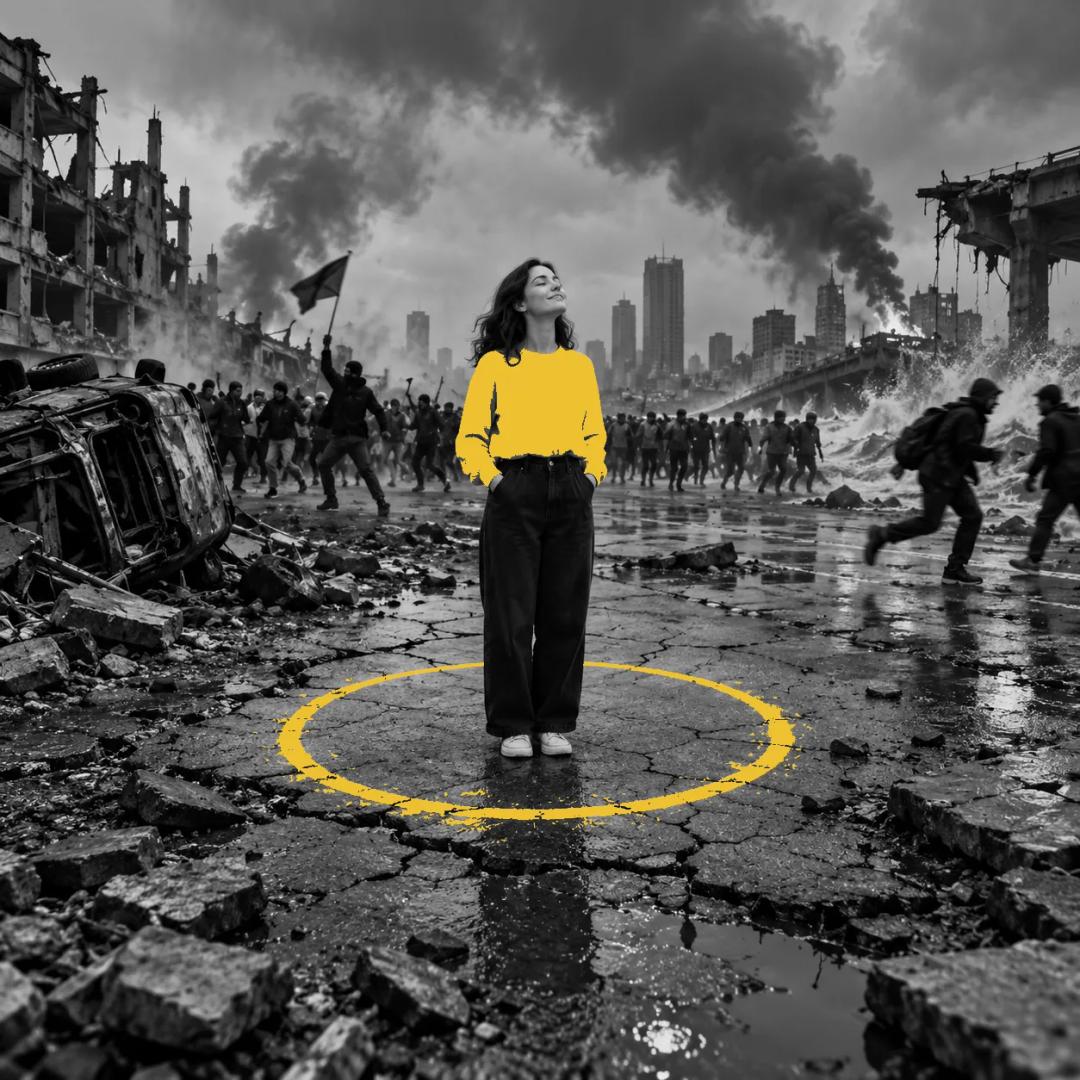
Personal belief in a just world is the belief that the world is just for me, as distinct from the general belief that the world is just. Claudia Dalbert's 1999 paper in Social Justice Research reports four questionnaire studies and one experiment showing that the two can be reliably distinguished, and that people endorse the personal version more strongly. The distinction matters because the research on how observers treat victims and the research on how a belief supports a person's own pursuit of goals may not be about the same belief.
What it is
The general belief in a just world, as Melvin Lerner framed it, is a view about how the world works: people broadly get what they deserve. Dalbert's contribution was to ask whether a person's belief about their own treatment is a separate thing. The Personal Belief in a Just World scale measures the second. The title of her validity paper states the central finding in plain words, that the world is more just for me than generally.
In the five studies the paper reports, personal belief could be reliably separated from general belief, and people endorsed the personal version more strongly. Personal belief also predicted self-esteem and well-being questionnaire scores after general belief and favourable self-perceptions were taken into account. These are questionnaire results and are reported here only as such. Dalbert read just-world beliefs as both world views and a personal contract between a person and the social world, which is a reading of the findings and not a separate result.
In effect
The distinction changes how the two halves of the just-world literature fit together. The experiments on victim derogation, described on the Victim Derogation page, are experiments about how observers treat other people's misfortune. The claim that the belief supports confident effort concerns a person's own life, and the evidence checked for this publication on that side concerns the personal version.
Adrian Furnham's chapter on the belief in The New Psychology proposes a different split, between beliefs about the personal, interpersonal and social worlds, and a third position in which the world is neither fair nor rigged but arbitrary. He offers both as proposals. Dalbert's two-way split is the one that comes with data in the sources checked here.
Dawtry and colleagues, working from the victim-derogation side of the literature, describe belief in a just world as linked to pursuing long-term goals with confidence. That description is general, and this page's own reading, not a finding of either paper, is that the coping half of the belief concerns the self, and the blaming half is one way the general belief is protected when other people's suffering threatens it.
What it does not say
It does not say that holding the personal belief makes a person kinder or harsher in judging others. The sources checked do not test that link.
It does not carry a clinical claim. The self-esteem and well-being results in Dalbert's paper are questionnaire scores, and this page makes no statement about health.
It does not reproduce the scale. The items are not given here, and the scale should be obtained from the original paper and its later validation work.
It does not settle the causal direction. Whether holding the belief leads to better outcomes, or people with better outcomes come to hold the belief, is left open by the chapter this page was written alongside.
It does not mean that the general belief is irrelevant. The paper's finding is that personal belief predicted outcomes after general belief had been accounted for, not that general belief predicted nothing.
Sources
- Dalbert, C. (1999). The world is more just for me than generally: About the Personal Belief in a Just World Scale's validity. Social Justice Research, 12(2), 79-98. doi:10.1023/A:1022091609047. Described here from the abstract and bibliographic record; participant numbers for the five studies were not available in the material consulted.
- Dawtry, R. J., Callan, M. J., Harvey, A. J., & Gheorghiu, A. I. (2020). Victims, vignettes, and videos. Personality and Social Psychology Review, 24(3), 233-259. doi:10.1177/1088868320914208.
- Furnham, A. (2024). The New Psychology, for the three-worlds proposal.