Promotion Signalling
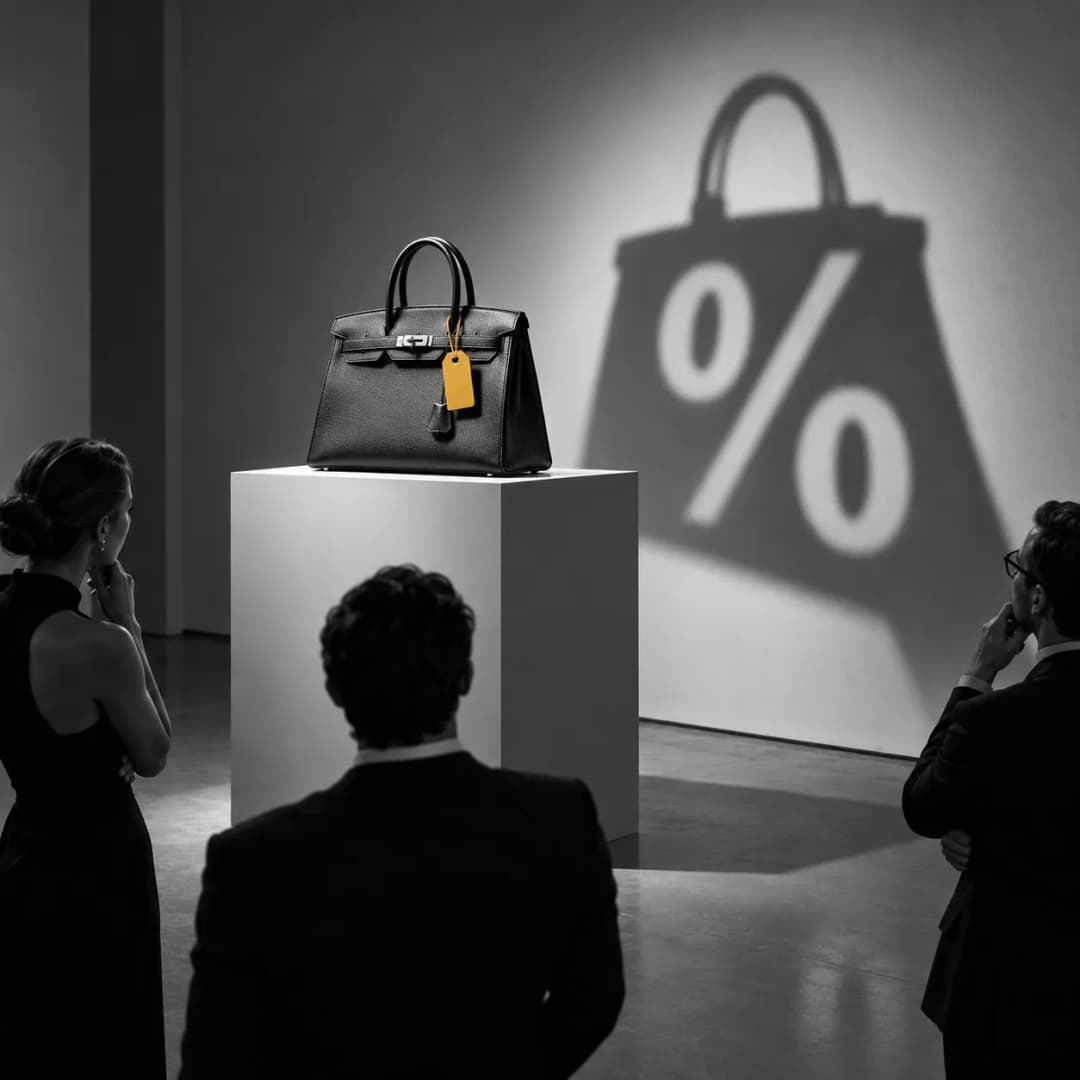
Promotion signalling treats a promotion as information about the brand, not only a lower price. Whether it lowers the brand's evaluation depends on three things: whether it fits the brand's earlier promotions, how usual promoting is in the industry, and how expert the consumer is. It explains why the first markdown from a house that has never run one can say more than the price cut does.
What it is
Priya Raghubir and Kim Corfman proposed in the Journal of Marketing Research in 1999 that a promotion signals quality when it departs from the brand's own past promotional pattern or from common industry practice. A shopper who sees a brand do something it does not usually do, or something its trade does not usually do, asks why, and the answer can be unflattering.
They also proposed a limit. Product experts have other ways to judge quality, so they rely on promotions less than novices do.
The tests were three laboratory studies. Each used a promotion designed to drive trial in a service industry. The measured outcome was brand evaluation before purchase, not purchase.
In effect
The studies found that consistency with past promotions, how unusual promoting was within the industry, and consumer expertise determined when promotions hurt brand evaluations. The authors drew out an implication for service providers who use promotions to attract new customers in industries where promotions are rare: there, the promotion carries information the provider may not intend.
The article Why Luxury Brands Hold Their Prices reads that across to luxury, with a stated gap. A house that has never marked down departs from its own past on the first markdown, and from its trade's practice if promotions are rare there. Both clauses are the article's inference. The experiments did not use luxury goods.
What it does not say
It does not say every promotion lowers evaluations. The effect is conditional, and a brand that promotes regularly in an industry where promotion is routine is, on this account, the safest case.
It does not say anything about sales. The outcome was how consumers rated the brand before purchase.
It does not establish what happens to a luxury house. The service used was a trial-driving promotion in a laboratory setting, and the abstract does not name the industry.
The paper was read here at the level of its published abstract.
Why the brand's own history matters
The idea has a practical consequence that is easy to miss. A promotion is not read against an abstract standard. It is read against what this brand has done and what this industry does. The same twenty per cent off can be routine for one seller and a surprise from another, and on this account only the surprise carries a message.
That makes the first promotion a different event from the tenth. A brand that promotes often has taught its customers what promotions mean for it, and a further one adds little information. A brand that never has is, in effect, speaking for the first time. The authors' implication for service providers in industries where promotions are rare follows directly: the provider may intend a price cut as an invitation to try, while the customer takes it as a clue about quality.
The role of the consumer's expertise
The second limit the authors proposed is about the reader, not the brand. Experts have other ways to judge quality, so they lean on the promotion less. A novice has fewer cues and reads the promotion as one of the few available.
For a luxury house this cuts in an uncomfortable way. On the authors' account, its least informed customers are the ones most likely to read a markdown as a signal, and its most expert customers rely on it less. The abstract does not say which group matters more commercially, and the experiments did not use luxury goods, so this page states the tension and no more.
How it differs from the long-run promotion effect
The two ideas are often run together, and they are separate. Promotion signalling is about how one promotion changes what a customer thinks of a brand before buying. The long-run promotion effect is about what repeated promotion does to sales and brand equity over years of purchases. The first was tested in a laboratory with evaluations as the outcome. The second was estimated on panel data of real purchases of packaged goods. A house could face one without the other, and the article treats them as two separate planks in the case for holding prices.
What a test on luxury would need
To test the idea on a luxury brand, a study would need real or realistic markdowns from a house with a known promotion history, customers of different expertise, and a measure of brand evaluation taken before and after. The searches run for the article found no such study. Until one exists, promotion signalling is a well-supported explanation of laboratory behaviour that the luxury case borrows by analogy.
Sources
- Raghubir, P., & Corfman, K. (1999). 'When Do Price Promotions Affect Pretrial Brand Evaluations?' Journal of Marketing Research, 36(2), 211-222. doi:10.1177/002224379903600206
- Mela, C. F., Gupta, S., & Lehmann, D. R. (1997). 'The Long-Term Impact of Promotion and Advertising on Consumer Brand Choice.' Journal of Marketing Research, 34(2), 248-261. doi:10.1177/002224379703400205
- Jedidi, K., Mela, C. F., & Gupta, S. (1999). 'Managing Advertising and Promotion for Long-Run Profitability.' Marketing Science, 18(1), 1-22. doi:10.1287/mksc.18.1.1