Reinforcement and Punishment
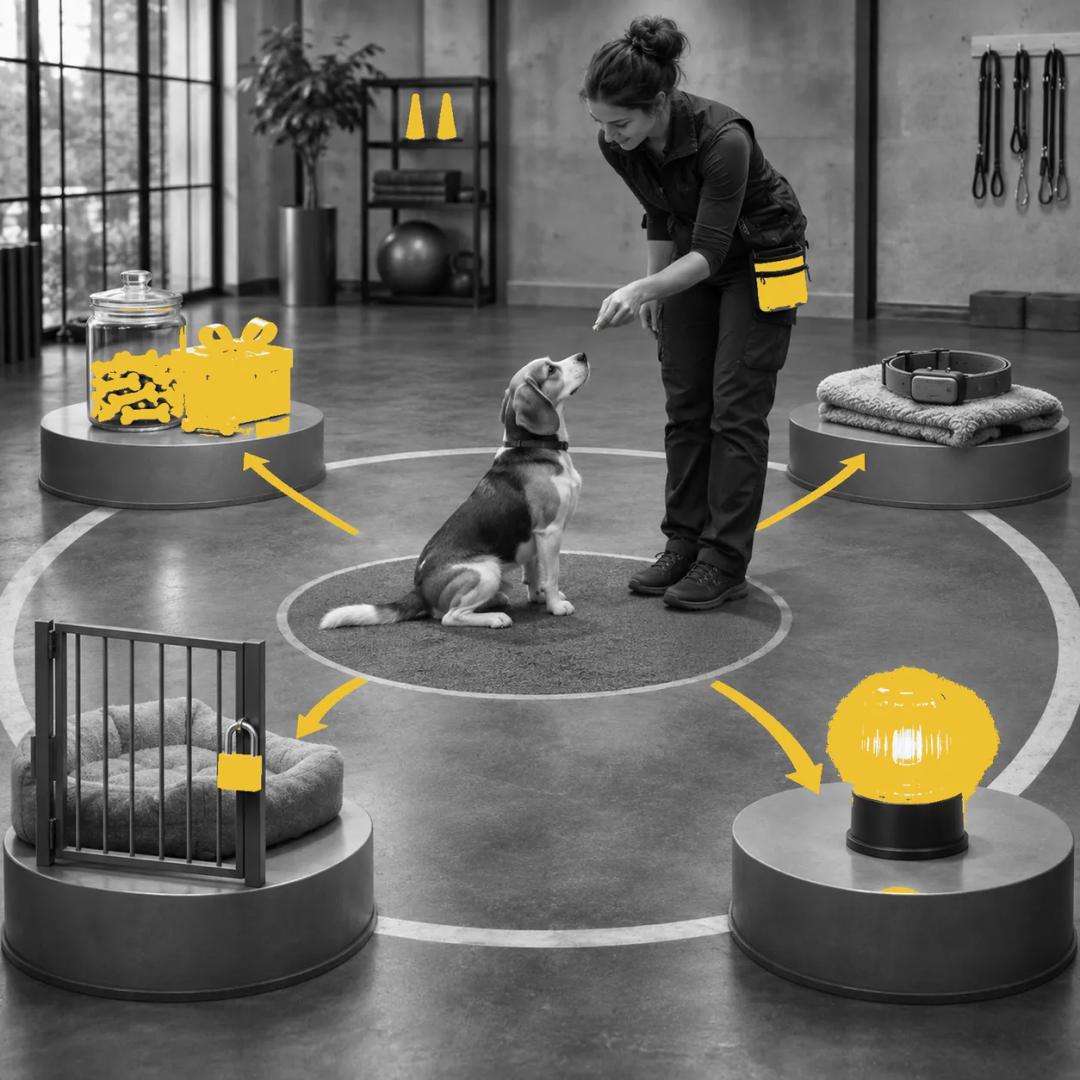
The two families of consequence in operant conditioning: reinforcement makes a behaviour more likely, punishment makes it less likely.
What it is
Reinforcement can add something valued or remove something unwelcome; either way the behaviour becomes more likely. Punishment makes it less likely. What counts as reinforcement is defined by its effect on behaviour and not by how pleasant it looks to an observer, which is how a porpoise could be trained to produce new kinds of behaviour by reinforcing novelty itself.
In effect
In the article on operant conditioning, a table sets the four consequences side by side, with a laboratory and an everyday example for each.
What it does not say
The terms are defined by their effect on behaviour, not by intent. The article describes everyday behaviour and gives no advice on training or discipline.
Sources
- Skinner, B. F. (1948). 'Superstition' in the pigeon. Journal of Experimental Psychology, 38(2), 168-172.
- Lattal, K. A. (1998). A century of effect: Legacies of E. L. Thorndike's Animal Intelligence monograph. Journal of the Experimental Analysis of Behavior, 70(3), 325-336.
- Pryor, K. W., Haag, R., & O'Reilly, J. (1969). The creative porpoise: Training for novel behavior. Journal of the Experimental Analysis of Behavior, 12(4), 653-661.