REM Sleep
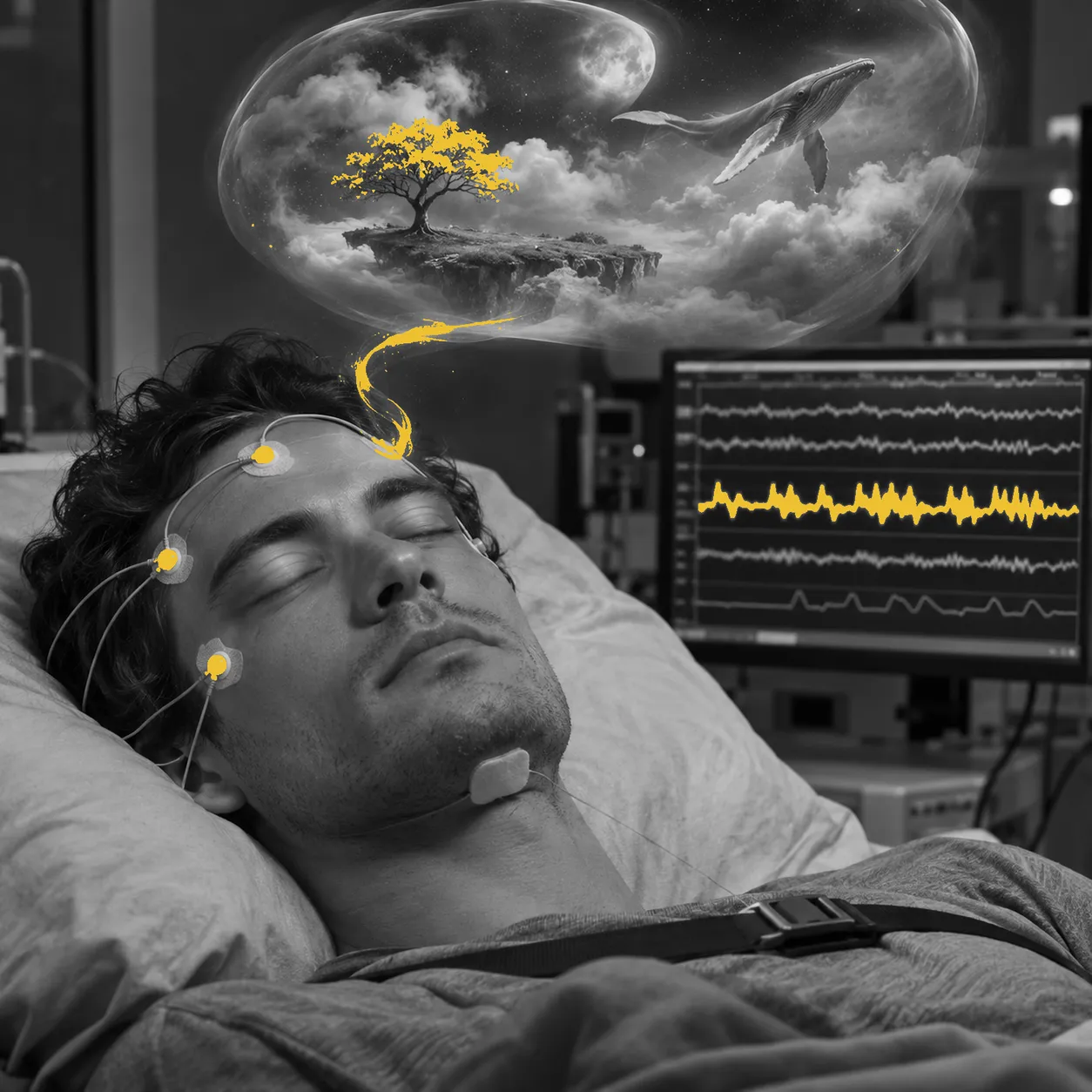
The sleep stage marked by periods of rapid eye movement, first recorded in 1953, from which detailed dream reports were often obtained.
What it is
Aserinsky and Kleitman recorded eye movements and brain waves in 20 adult volunteers and found periods of rapid eye movement that recurred through the night. Waking sleepers during these periods produced detailed dream reports in 20 of 27 interviews, while most awakenings after long quiet stretches produced no recall.
In effect
In the article on why we dream, it is the finding that gave dream research a measurable starting point.
What it does not say
Later work found dreaming in other sleep stages too, so rapid-eye-movement sleep is not the only time dreams occur.
Sources
- Aserinsky, E., & Kleitman, N. (1953). Regularly occurring periods of eye motility, and concomitant phenomena, during sleep. Science, 118(3062), 273-274.
- Siclari, F., Baird, B., Perogamvros, L., Bernardi, G., LaRocque, J. J., Riedner, B. A., Boly, M., Postle, B. R., & Tononi, G. (2017). The neural correlates of dreaming. Nature Neuroscience, 20(6), 872-878.