Sensory-Specific Satiety
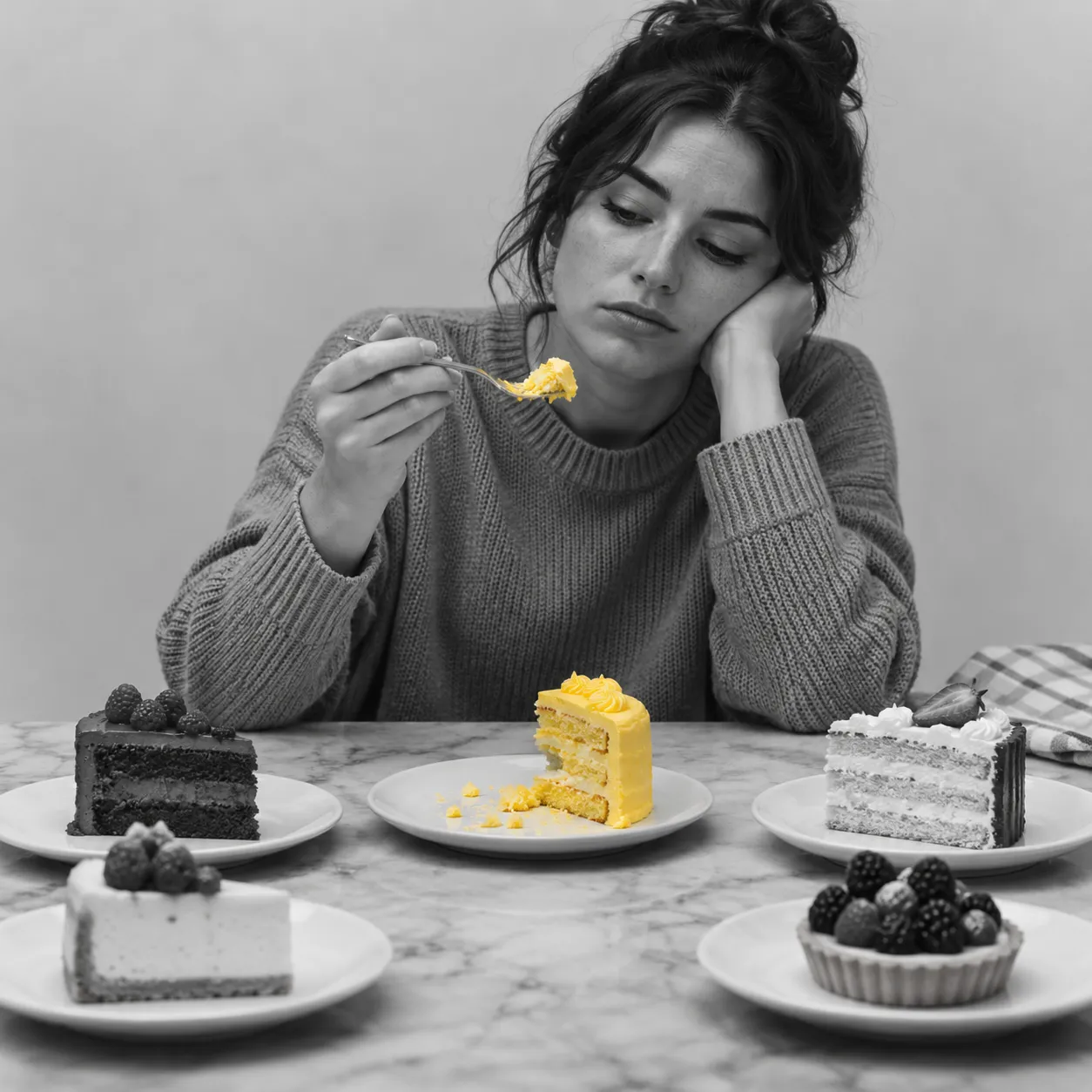
Sensory-specific satiety is the drop in how pleasant a food seems as it is eaten, measured against foods that have not been eaten. The drop belongs to the sensory qualities of that food, so a different food can still appeal when the first one has lost its pull.
What it is
Barbara Rolls, Edmund Rolls, Edward Rowe and Kevin Sweeney gave the effect its name in 1981. In their experiment, 32 people rated how pleasant eight foods tasted, ate one of them for lunch, and rated all eight again two and twenty minutes later. The food that had been eaten fell in pleasantness more than the foods that had not. A second experiment in the same paper found that this relative drop was linked to what people ate when more food was offered.
The change was fast. It was present two minutes after the meal ended and did not grow further by twenty minutes. A 1983 study from the same group found that the look of a food eaten to satiety also became less pleasant than the look of foods not yet eaten, so the effect is not confined to taste.
In effect
The effect separates two things that everyday speech runs together: feeling full and finding the next mouthful of the same food less pleasant. The second can be well advanced while a food with different qualities still appeals. Stephan Guyenet, in The Hungry Brain, uses the effect to explain why a sweet course still tempts after a savoury meal.
The same specificity underlies the variety effect. When foods differ clearly in taste, texture and look, offering several of them in a meal raises the amount eaten. In one study, a four-course lunch with a different food in each course led to about 60 per cent more energy eaten than four identical courses.
What it does not say
The effect describes a change in rated pleasantness and its link to intake in laboratory meals. It does not say that every difference between foods restores appetite: chocolates that differed only in colour lowered the pleasantness of the eaten colour without raising intake, and yogurts that differed only in taste did not raise intake either. Leonard Epstein and colleagues offer a different account of the same decline, as habituation to a repeated stimulus. The page makes no claim about diet or health.
Sources
- Rolls, B. J., Rolls, E. T., Rowe, E. A., & Sweeney, K. (1981). Sensory specific satiety in man. Physiology & Behavior, 27(1), 137-142. https://doi.org/10.1016/0031-9384(81)90310-3
- Rolls, E. T., Rolls, B. J., & Rowe, E. A. (1983). Sensory-specific and motivation-specific satiety for the sight and taste of food and water in man. Physiology & Behavior, 30(2), 185-192. https://doi.org/10.1016/0031-9384(83)90003-3
- Rolls, B. J., Van Duijvenvoorde, P. M., & Rolls, E. T. (1984). Pleasantness changes and food intake in a varied four-course meal. Appetite, 5(4), 337-348. https://doi.org/10.1016/S0195-6663(84)80006-9
- Rolls, B. J., Rowe, E. A., & Rolls, E. T. (1982). How sensory properties of foods affect human feeding behavior. Physiology & Behavior, 29(3), 409-417. https://doi.org/10.1016/0031-9384(82)90259-1
- Epstein, L. H., Temple, J. L., Roemmich, J. N., & Bouton, M. E. (2009). Habituation as a determinant of human food intake. Psychological Review, 116(2), 384-407. https://doi.org/10.1037/a0015074
- Guyenet, S. J. The Hungry Brain.