Sludge
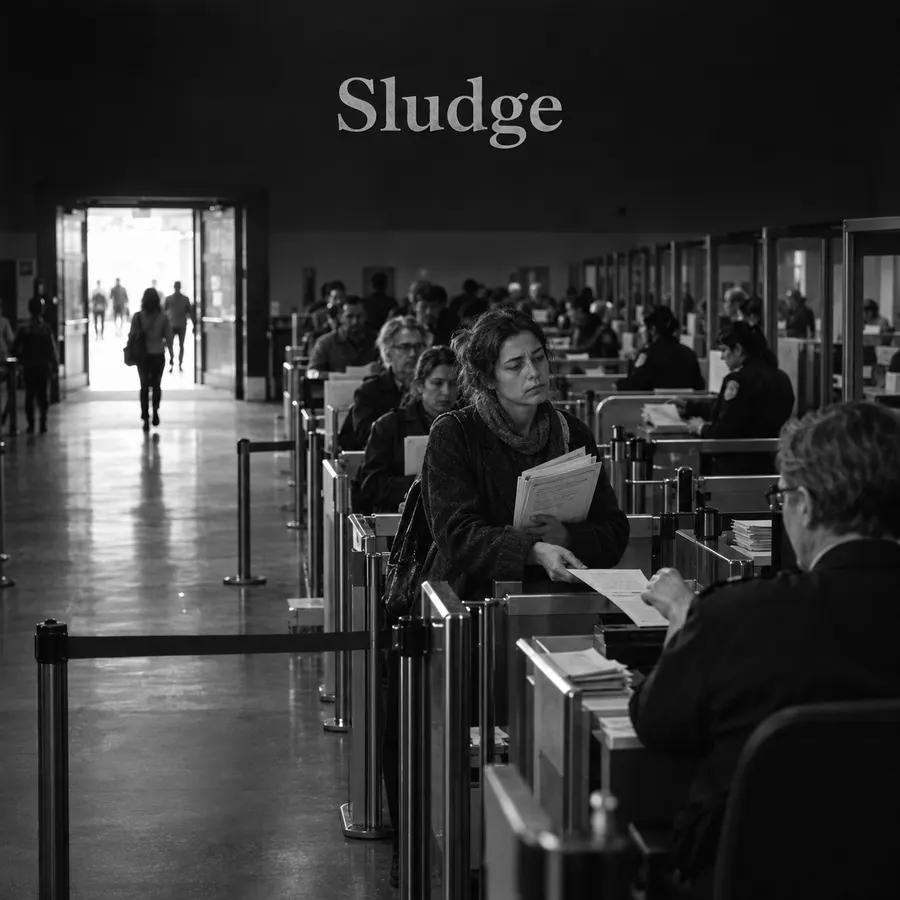
Friction placed where it serves whoever built the system rather than the person moving through it. Richard Thaler's phrase is nudging for evil.
What it is
The definition turns on direction. A confirmation step that prevents an accidental purchase is protection. The identical step, placed only on the exit, is sludge.
Thaler named it in Science in 2018, ten years after Nudge, against the standard he and Cass Sunstein had set: that a conscientious choice architect helps people choose better as judged by themselves.
In effect
A subscription takes one screen to join. Leaving requires a settings page in an unexpected place, a retention offer, a survey, a second retention offer, a confirmation and an email.
No single step is unreasonable. That is the design. Sludge works by being individually defensible and cumulatively decisive.
Shahab and Lades note that sludge and transaction costs are related but distinct. The distinction worth keeping is that a transaction cost is a cost of doing business, while sludge is a cost somebody chose to add and could remove tomorrow.
What it does not say
It does not say all friction is bad, and the piece that uses this note opens by conceding as much.
It also does not describe a tax on the careless. Survey evidence from 1,591 people reports that those with poor mental health feel more vulnerable to sludge and accept it less, and that procrastination and a lack of time or mental energy predict more vulnerability. That rules out consumer vigilance as the remedy, since vigilance is the resource being targeted.
Sources
- Thaler, R. H. (2018). Nudge, not sludge. Science, 361(6401), 431. doi:10.1126/science.aau9241
- Lades, L. K., Samahita, M., Martin, L., Sunstein, C. R., & Baekgaard, M. (2025). Vulnerability to and acceptability of different types of sludge. Behavioural Public Policy. doi:10.1017/bpp.2025.10020
- Shahab, S., & Lades, L. K. (2021). doi:10.1017/bpp.2021.12
- Where this came from
- No book in this library is the source of this concept. It entered the vault from Count the Steps In, Then the Steps Out, built from primary sources rather than from a book.