The Lindy Effect
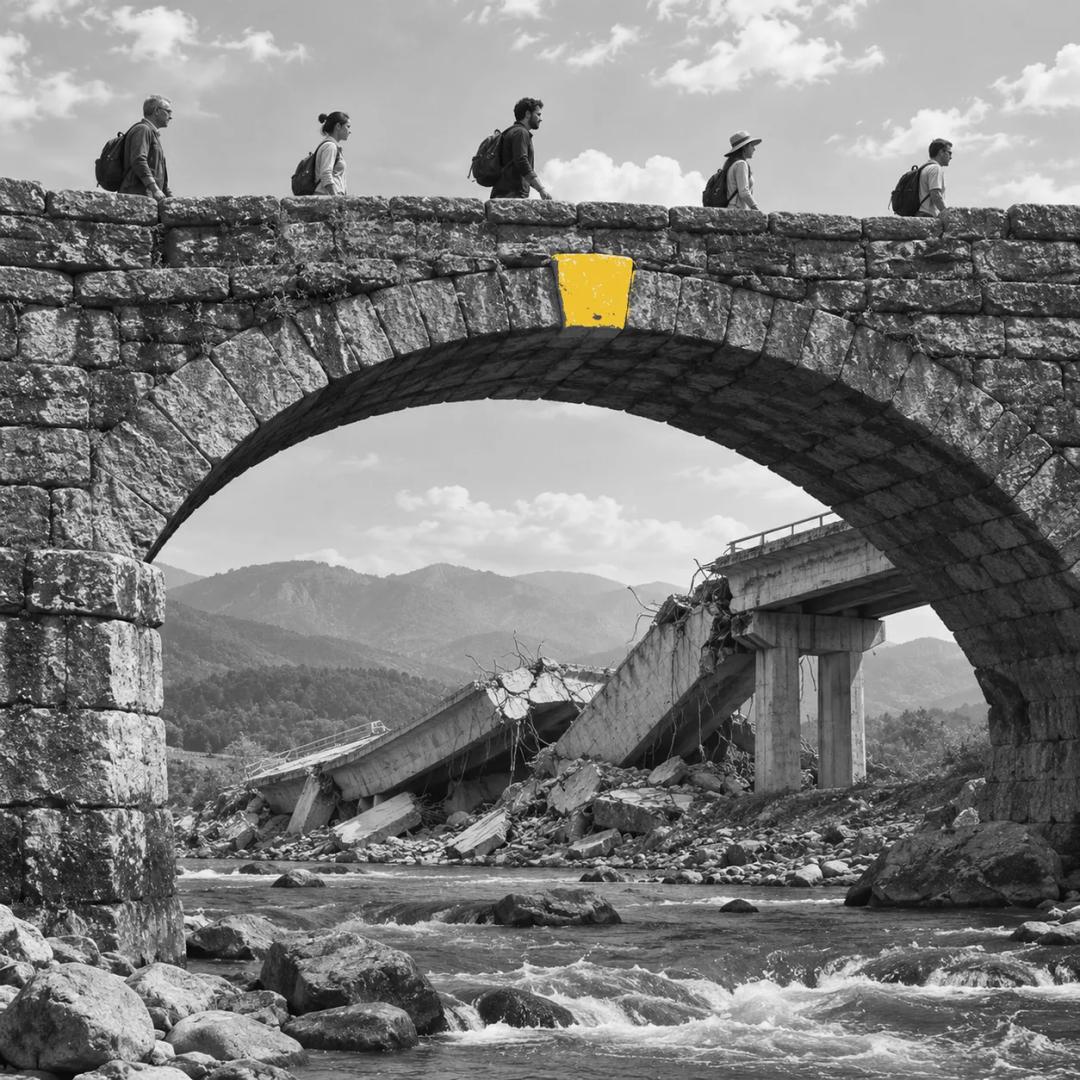
The pattern in which the expected remaining life of certain non-perishable things rises with the age already reached.
What it is
For some non-perishable things, such as ideas, books and customs, the longer they have lasted, the longer they can be expected to last. Toby Ord separates a broad version, in which expected future life rises with age, from narrow versions in which it equals the age reached, and sets out several routes to the pattern. Iddo Eliazar related it to Pareto's law and Zipf's law in 2017.
In effect
In the article on the Lindy effect, perishable and non-perishable things alternate to show where the rule holds and where it fails.
What it does not say
It does not apply where the chance of ending rises with age, as in most of a human life, and it gives no signal where that chance is constant, as a study of companies found.
Sources
- Ord, T. (2023). The Lindy Effect. arXiv preprint 2308.09045.
- Eliazar, I. (2017). Lindy's Law. Physica A: Statistical Mechanics and its Applications, 486, 797-805.
- Daepp, M. I. G., Hamilton, M. J., West, G. B., & Bettencourt, L. M. A. (2015). The mortality of companies. Journal of The Royal Society Interface, 12(106), 20150120.
- Gott, J. R. (1993). Implications of the Copernican principle for our future prospects. Nature, 363(6427), 315-319.