Visual Attention to Television
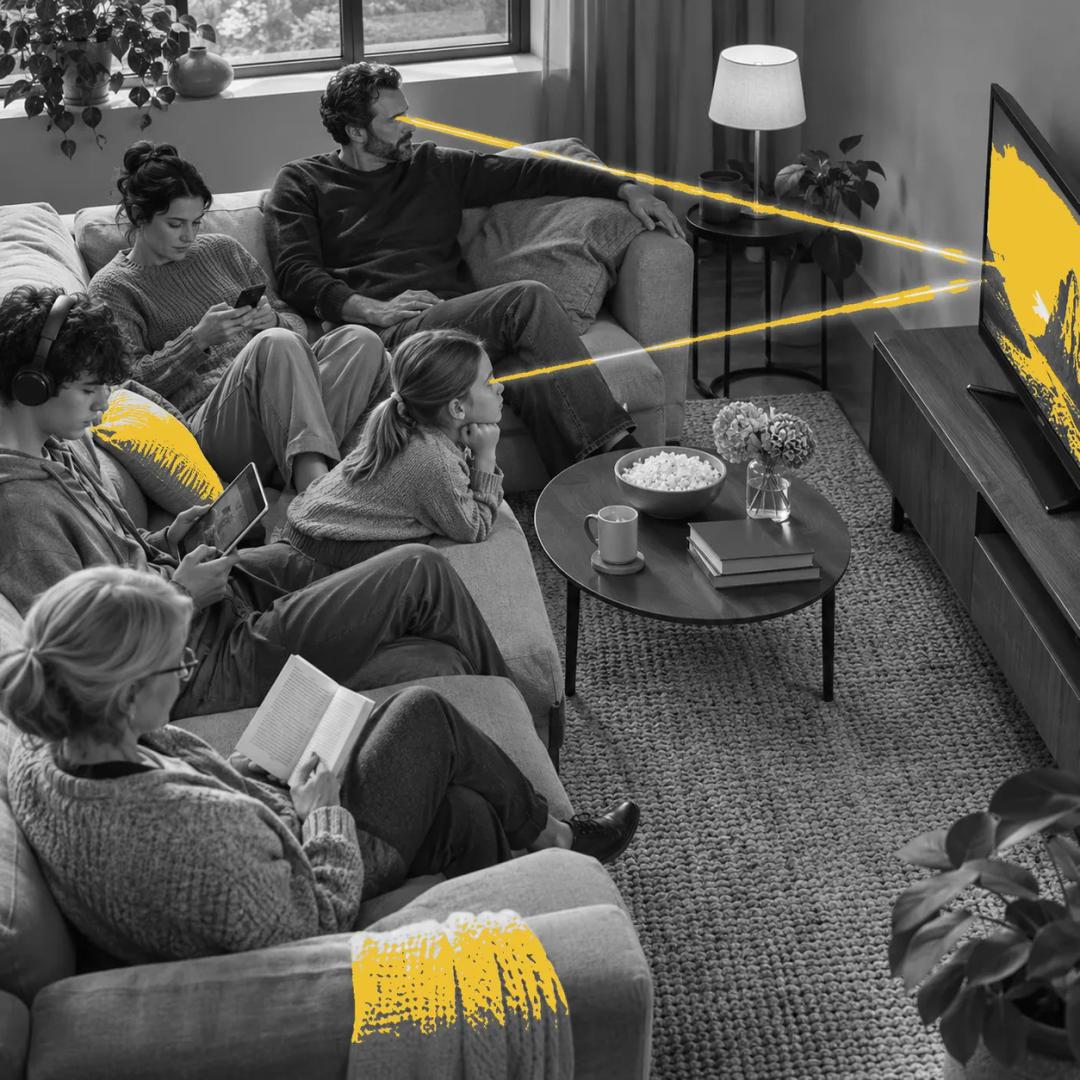
The share of time a person with a set on in the room looks at the screen, which differs from whether the set is tuned.
What it is
Daniel Anderson and colleagues recorded home viewing with time-lapse cameras in 99 families. The room had no viewer for 14.7 per cent of the time the set was on, and among those present, looking at the screen rose through the preschool years, levelled off at about 70 per cent in school age and declined in adulthood.
In effect
In the article on peak attention, it separates a set being on from a person paying attention, which matters for any claim about how much attention an era captured.
What it does not say
The figures come from families recorded in the 1980s and describe looking, not understanding or remembering.
Sources
- Anderson, D. R., Lorch, E. P., Field, D. E., Collins, P. A., & Nathan, J. G. (1986). Television viewing at home: Age trends in visual attention and time with TV. Child Development, 57(4), 1024.