Edward Thorndike
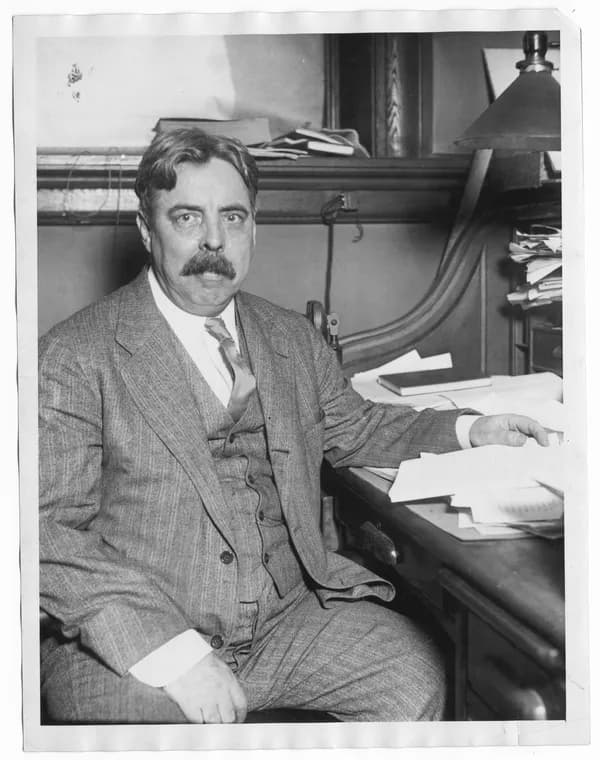
Edward L. Thorndike, 1874 to 1949, was an American psychologist at Teachers College, Columbia University, whose work founded the experimental study of learning and of transfer of training. With Robert Woodworth he published in 1901 the papers that demolished the formal-discipline theory of education, the belief that studying difficult subjects strengthens the mind in general. He also gave the halo effect its name.
Who they are
Formal discipline was the governing theory of education in the nineteenth century. Latin and geometry were taught not because anyone needed them but because hard subjects were held to strengthen the faculties, in the way exercise strengthens a muscle. Thorndike and Woodworth tested it. Training on one task improved that task and did not generalise except where the two tasks shared identical elements. The finding is narrow, it has been worked on continuously for more than a century, and it is the origin of everything the field now says about transfer, including negative transfer and proactive and retroactive interference.
It is also the reason modern claims that training one cognitive skill will improve another face the burden of proof they do. That burden was established in 1901 and has rarely been discharged since.
The halo effect is the other thing his name is attached to here, and this site treats it as background rather than as verified ground. The naming is his. The original paper has not been read here, and until it is, nothing specific about its design, its sample or its figures appears on this page.
Key papers
Thorndike, E. L., & Woodworth, R. S. (1901), "The influence of improvement in one mental function upon the efficiency of other functions," Psychological Review, 8, published in three parts. The founding work on transfer of training. The pagination has not been checked against the journal and is flagged in the vault as unverified.
The 1920 paper that named the halo effect is treated here as unverified background. It has not been read on this site, and no citation is given for it until it has been.
Key ideas
Transfer of training is the doctrine that fell in 1901. Improvement on one task does not generalise except where the tasks share identical elements.
Formal discipline was a theory about education and was tested as an empirical claim. It failed.
The burden of proof on any transfer claim dates from this work. Modern cognitive-training arguments inherit it.
Negative transfer belongs to the same tradition, as do proactive and retroactive interference. This is a live literature rather than a historical curiosity.
He named the halo effect. This site holds that as background pending verification of the original paper.
Sources
- Thorndike, E. L., & Woodworth, R. S. (1901), "The influence of improvement in one mental function upon the efficiency of other functions," Psychological Review, 8, in three parts. Pagination not checked against the journal, flagged 15 September 2026.
- Vault note: [[Edward Thorndike]], which carries that flag and the position on the halo effect paper.