Jeffrey Rachlinski
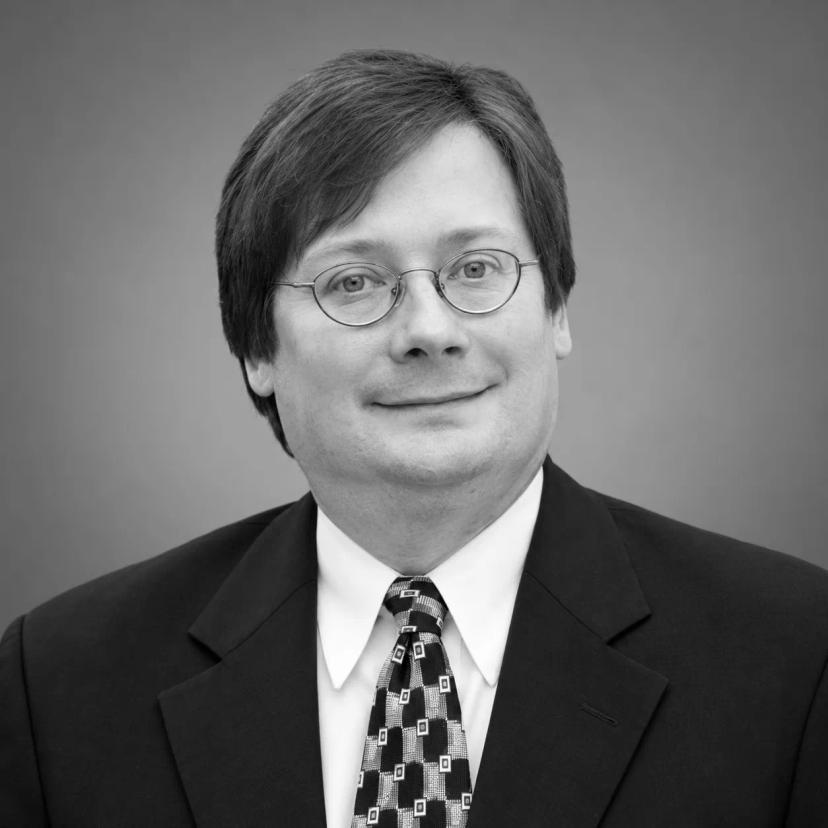
Jeffrey Rachlinski is a law professor, listed at Cornell Law School on the paper, and the co-author with Kim Kamin of the 1995 Law and Human Behavior study 'Ex post ≠ ex ante: Determining liability in hindsight'. The study compared foresight and hindsight judgements of a flood, and found that knowing the result made the same decision look negligent.
Who they are
This page records the public professional record only. Nothing adverse is recorded and no motive is attributed.
The affiliation is the one the paper's record gives, and his wider career was not surveyed for this page. The paper is the one piece of his work used on this site, in the article What Outcome Bias Does to a Good Call.
Key papers
- Kamin, K. A., & Rachlinski, J. J. (1995). 'Ex post ≠ ex ante: Determining liability in hindsight.' Law and Human Behavior, 19(1), 89-104.
Key ideas
The paper asks a question that matters in law: if a court decides liability after a disaster has happened, can it judge fairly a precaution that someone declined to take before it? The experiment gave one group the evidence as an administrative hearing before the event, another the same material as a trial after it, and a third the trial with a procedure meant to reduce the bias.
The paper reports that about three-quarters of the foresight participants found the flood too unlikely to justify further precautions, that most of the hindsight participants judged the same decision negligent, and that the hindsight participants gave higher estimates of how probable the disaster had been. The debiasing procedure produced no significant difference. The authors concluded that, absent an effective debiasing technique, risk assessments made in foresight will be judged harshly in hindsight.
The finding links two ideas that this site keeps apart. Hindsight bias is the distortion in what a person thinks was predictable once the result is known. Outcome bias is the rating of a decision by its result. A negligence verdict after a flood involves both, since the judge must reconstruct what was predictable and then rate the decision on that reconstruction. The article calls the study the sibling of outcome bias for that reason, and does not treat it as a direct test of the 1988 effect.
The finding is also the factual core of a claim Daniel Kahneman makes in Thinking, Fast and Slow: that the people who make decisions under uncertainty are audited afterwards, when the uncertainty has resolved and looks as though it never existed. Kahneman's chapter gives the foresight and hindsight figures without naming the paper, and the vault note that traces it to Kamin and Rachlinski records that the comparison matches.
The limits follow from the evidence read. The abstract has no sample size and no description of the participants. The debiasing finding concerns one procedure. And the study's setting, a municipal hearing and a mock trial, differs from a clinic, a boardroom or a market, which is why the article pairs it with a work-setting experiment and a betting-market study.
How the paper was read
The paper was read here at the level of its published abstract. The full text, the exact wording of the materials and the follow-up literature on legal hindsight were not seen.
How the paper is used on this site
The article What Outcome Bias Does to a Good Call uses it in the section on the rule as it would operate in a courtroom. The concept pages Hindsight Bias and Outcome Bias set the two effects side by side, and the page for his co-author, Kim Kamin, covers the same paper from the design side. Nothing on this page says anything about his other work on judgement and law, which was not surveyed.
The paper's lesson for a reader outside the law is simple to state and hard to apply. Before judging a past decision, write down what was known when it was made, and compare the result with that record, not with memory. The studies do not test that remedy, and the one remedy the paper did test, a caution given at the point of judgement, did not work.
Sources
- Kamin, K. A., & Rachlinski, J. J. (1995). 'Ex post ≠ ex ante: Determining liability in hindsight.' Law and Human Behavior, 19(1), 89-104.
Articles that cite Jeffrey Rachlinski
- What Outcome Bias Does to a Good Call
People rate a decision by how it turned out, even when told the decision maker knew only what they know. Five studies, from medical vignettes to betting prices, follow the habit into courtrooms…
Concepts on this site
- Hindsight Bias
Once you know how something turned out, you lose the ability to reconstruct what you believed before you knew. The old belief is not retrieved, it is rebuilt out of the new one. The founding study…
- Outcome Bias
Outcome bias is judging the quality of a decision by how it turned out rather than by whether the process behind it was sound. A good decision that ends badly gets punished; a reckless one that ends…