Jonathan Baron
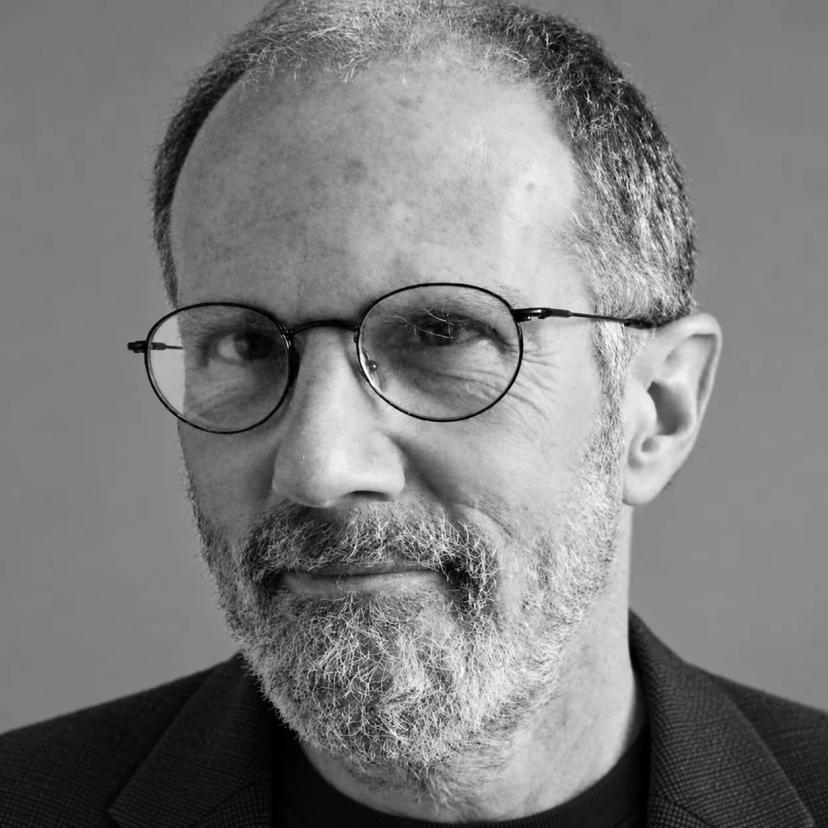
Jonathan Baron is a psychologist and the first author, with John Hershey, of the 1988 Journal of Personality and Social Psychology paper 'Outcome bias in decision evaluation'. Its five experiments showed that people rate a decision as better, and its maker as more competent, when the decision happened to turn out well, even when the judges know the maker had no more information than they have.
Who they are
The paper is hosted on a University of Pennsylvania site.
His wider career is not covered on this page, which concerns the one paper cited on this site, in the article What Outcome Bias Does to a Good Call. There the paper is the origin of the term outcome bias.
Key papers
- Baron, J., & Hershey, J. C. (1988). 'Outcome bias in decision evaluation.' Journal of Personality and Social Psychology, 54(4), 569-579.
Key ideas
The first experiment is the one most often described. Twenty undergraduates at the University of Pennsylvania, recruited by a sign on a campus walkway and paid by the hour, rated fifteen medical cases for the quality of the thinking behind a decision, on a seven-point scale from minus three to plus three. In the first set a 55-year-old man with heart disease considers bypass surgery with an 8 per cent risk of dying in the operation. Later sets used liver surgery, a foot-infection test too poor to change the best course, and a choice between two diagnostic tests. Each case appeared with a success and with a failure, and every probability was held constant.
The cases followed by success were rated 0.70 points higher on average. In 44.3 per cent of 140 matched pairs the success was rated higher, in 9.3 per cent the failure was, and in 46.4 per cent they were equal. The bias held when the patient made the decision, at a smaller size than when the physician did. Of the last eight subjects, seven said outcomes should not be considered, and as a group the seven still showed the bias.
The second experiment used 41 undergraduates, a scale from thirty to minus thirty and a new set of cases, including a woman with a 5 per cent chance of curable cancer, a treatment threshold of 20 per cent and an X-ray with an 80 per cent detection rate and a 20 per cent false-alarm rate. Subjects also rated how important the arguments for and against each choice were. Argument importance favoured the good-outcome decisions only when the physician decided, which fits the authors' partial explanation: an outcome makes the arguments for one side more salient.
What the work is for
The paper belongs to the study of how people evaluate other people's decisions: a patient's family judging a surgeon, a board judging a chief executive, a client judging an adviser. The experiments use short written cases so that every feature of a decision is fixed except its result.
How the paper is used on this site
The article What Outcome Bias Does to a Good Call uses the first experiment as its anchor, and the same paper's gamble and class experiments as supporting evidence. The concept page Outcome Bias carries the definition, and the page for his co-author, John Hershey, covers the same paper from the gambling and competence experiments.
Sources
- Baron, J., & Hershey, J. C. (1988). 'Outcome bias in decision evaluation.' Journal of Personality and Social Psychology, 54(4), 569-579.
Articles that cite Jonathan Baron
- Why Doing Harm Feels Worse Than Allowing It
Harm that follows an action is judged more harshly than the same harm that follows inaction. The research on omission bias shows where that comes from, why it can work as cover, and when it reverses.
- What is status quo bias?
Kahneman's Thinking, Fast and Slow derives status quo bias from loss aversion. Three other lines of research give it a different cause, or none.
- What Outcome Bias Does to a Good Call
People rate a decision by how it turned out, even when told the decision maker knew only what they know. Five studies, from medical vignettes to betting prices, follow the habit into courtrooms…
Concepts on this site
- Omission Bias
Omission bias is a preference for outcomes that follow from not acting over outcomes that follow from acting. Ilana Ritov and Jonathan Baron found in 1992 that it accounts for at least part of what…
- Outcome Bias
Outcome bias is judging the quality of a decision by how it turned out rather than by whether the process behind it was sound. A good decision that ends badly gets punished; a reckless one that ends…
- Status Quo Bias
The arrangement already in place is preferred to the alternatives beyond what its merits justify. It is why a default, once set, is so difficult to shift.