Mark Levine
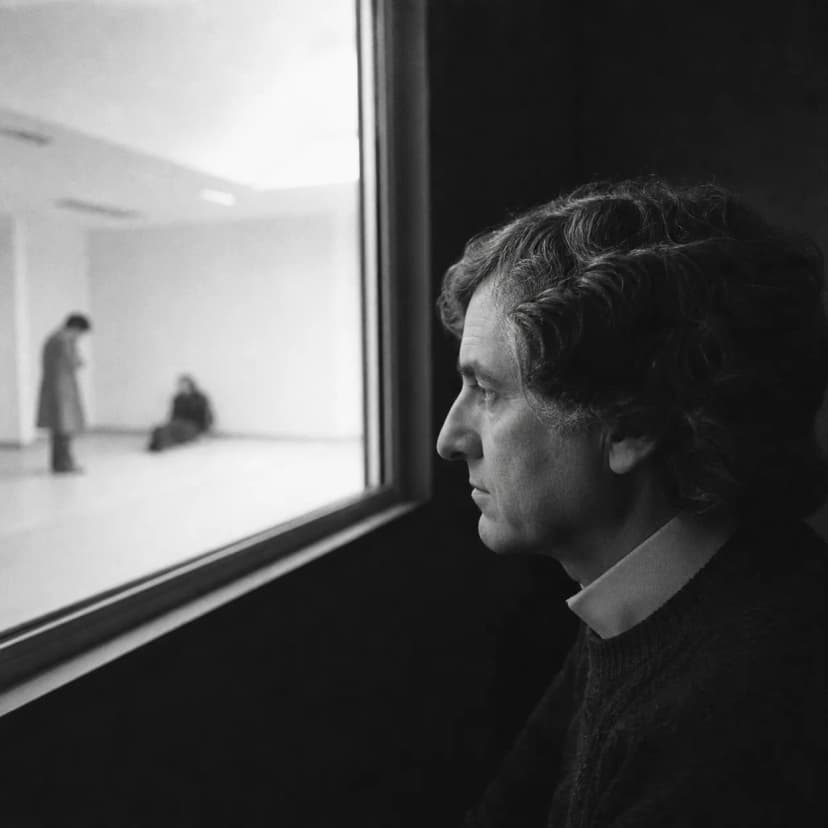
Mark Levine is Professor of Social Psychology at Lancaster University, and he sits at both ends of the bystander question. He was a co-author of the 2007 paper that took the Kitty Genovese story back to the archive and found its three founding claims unsupported, and thirteen years later a co-author of the 2020 study that coded closed-circuit television footage of real public conflicts and found that somebody intervened in about nine out of ten of them. Taking apart a founding parable and then going and measuring the reality is what a research programme looks like when it is working.
Who they are
Levine is a social psychologist at Lancaster University whose work is on helping behaviour, and the reason he matters to this site is the arc of it rather than any single result.
The first half is the archival work. In 2007, with Rachel Manning as first author and Alan Collins as the third, he published a reconstruction of the Kitty Genovese case in American Psychologist, drawing on the trial record, police files and press reports. Three claims had carried the story for forty years: that there were 38 witnesses, that they watched the murder, and that they did nothing. None of the three is supported by the record. The figure of 38 appears nowhere in the police files. The fatal second attack happened in a vestibule almost nobody could see into. At least two neighbours telephoned the police, one man shouted from a window and drove the attacker off, which is why there was a second attack at all, and a friend came down and held her while she died.
None of that touches Darley and Latané's experiments, and the paper does not claim it does. The laboratory effect is real. What was false was the illustration rather than the finding, and the distinction is the whole point.
The second half is the field work. In 2020, with Richard Philpot as first author, he was part of the team that coded CCTV footage of 219 real public conflicts in the entertainment and business districts of Amsterdam, Cape Town and Lancaster, three cities that differ sharply in how safe their public space is perceived to be. At least one bystander intervened in roughly nine out of ten incidents, usually several people, and the rate held in all three cities. More bystanders present made intervention more likely rather than less.
Both results stand, and the reconciliation is arithmetic rather than a contest. The laboratory measured the probability that a given individual acts, which falls as the group grows. The street measures the probability that anybody acts, which rises, because a larger group is more likely to contain someone who will move. Credit on both papers goes first to the first author, Manning in 2007 and Philpot in 2020, which is this site's standing rule and is worth stating here because the 2007 paper is often referred to by Levine's name, the better known of the three.
Key papers
Manning, R., Levine, M., & Collins, A. (2007). "The Kitty Genovese Murder and the Social Psychology of Helping: The Parable of the 38 Witnesses." American Psychologist, 62(6), 555-562. No evidence for 38 witnesses, none that witnesses observed the murder, and none that they remained inactive. Rachel Manning is first author.
Philpot, R., Liebst, L. S., Levine, M., Bernasco, W., & Lindegaard, M. R. (2020). "Would I Be Helped? Cross-National CCTV Footage Shows That Intervention Is the Norm in Public Conflicts." American Psychologist. Two hundred and nineteen real public conflicts in Amsterdam, Cape Town and Lancaster; intervention in nine of ten; more bystanders associated with a greater likelihood of intervention. Richard Philpot is first author.
Key ideas
The parable and the finding are separable. The Genovese story failed in all three of its claims, and the Darley and Latané experiments it was used to illustrate did not. A false illustration is not a false effect.
Intervention is the norm in real public conflict. Nine out of ten, across three cities chosen for how differently safe they feel. That is the opposite of what the popular version of the bystander effect leads people to expect.
Group size cuts both ways, and the two results are not in conflict. Each additional person is individually less likely to move. The group is more likely to contain somebody who will.
What the footage cannot say. The cameras record outcomes and nothing about the people in them. They cannot say who had been drinking, who knew the parties, or who worked the door for a living. Intervention is common and, after this study, still unexplained.
Sources
- Manning, R., Levine, M., & Collins, A. (2007). "The Kitty Genovese Murder and the Social Psychology of Helping: The Parable of the 38 Witnesses." American Psychologist, 62(6), 555-562.
- Philpot, R., Liebst, L. S., Levine, M., Bernasco, W., & Lindegaard, M. R. (2020). "Would I Be Helped? Cross-National CCTV Footage Shows That Intervention Is the Norm in Public Conflicts." American Psychologist.
- Darley, J. M., & Latané, B. (1968). The original diffusion of responsibility experiments. Cited here for the effect the 2007 paper leaves standing.
- Lancaster University, Department of Psychology faculty page. Affiliation and post.
- Vault note: [[Mark Levine]].