Scarcity as a Quality Signal
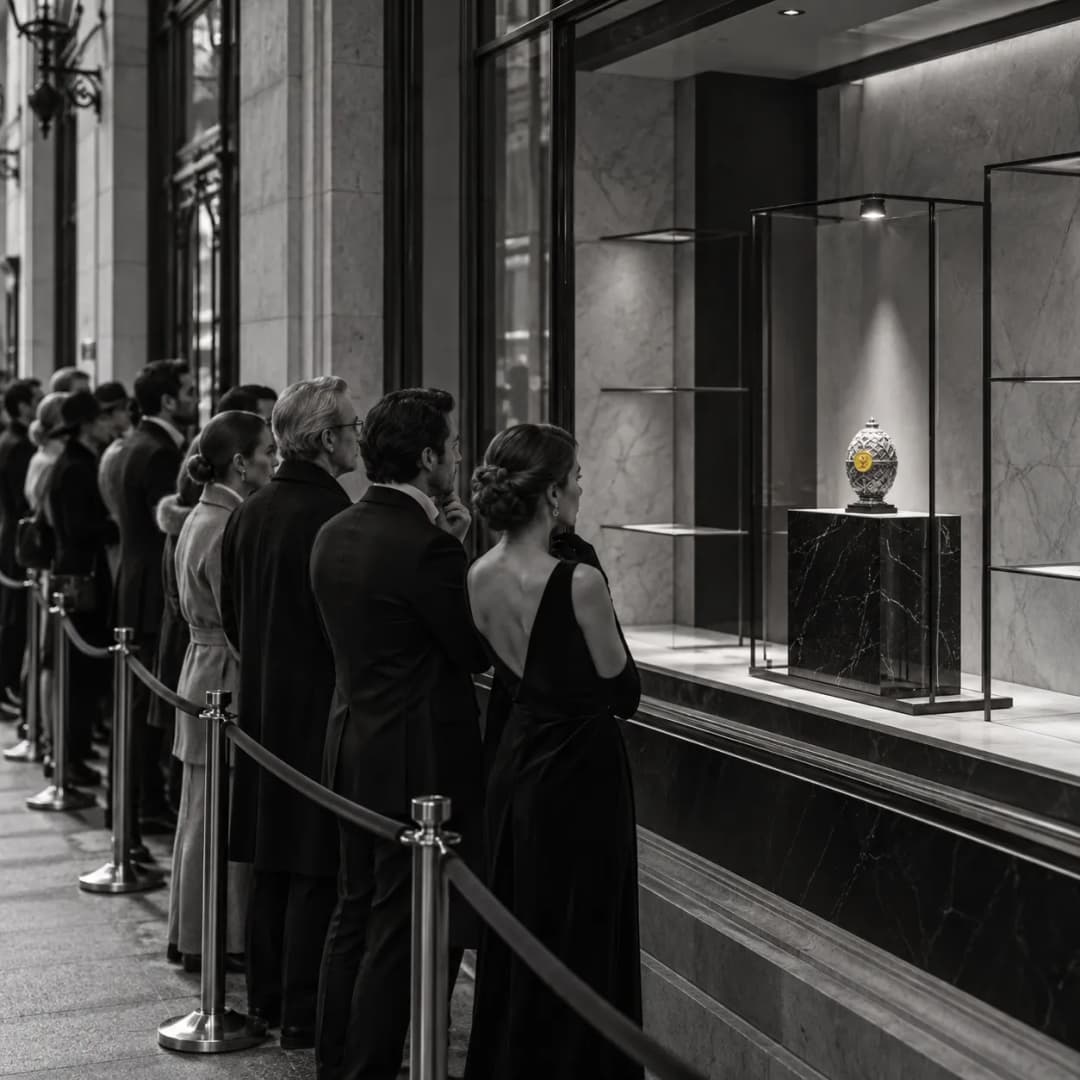
Scarcity as a quality signal is the proposal that a seller of a high-quality product can credibly signal its quality by making the product hard to get. It is a theory of supply with no price cuts in it, and it is why a luxury house might ration rather than mark down.
What it is
Axel Stock and Subramanian Balachander set it out in Management Science in 2005 as a game-theoretic model. Customers cannot tell the quality of a product before they buy, and the model asks when a high-quality seller can credibly signal it by making the product scarce.
The model gives conditions under which scarcity works as a signal. It works most often when the marginal cost difference between high and low-quality products is small, when the reservation price for a low-quality product is low, when reservation prices for a high-quality product vary widely across consumers, and when the number of informed consumers is moderate.
In effect
The authors suggest this explains why scarcity strategies are common for discretionary and specialty products and rare for commodity, staple or new-to-the-world products.
The article Why Luxury Brands Hold Their Prices sets it beside the 2020 markdown model by Arifoğlu, Deo and Iravani: two theories of how a seller can use supply, one without price cuts and one with them. Veblen made the older, informal version in 1899 when he wrote that a limited edition is in effect a guarantee that a book is scarce.
What it does not say
It does not say luxury brands should never mark down. The model concerns making a product scarce, and it is silent on what to do with the stock that is left.
It does not report data. The result is a property of a model.
It does not say consumers read scarcity as quality in every market. The conditions above are the limits the authors state.
The paper was read here at the level of its published abstract. For field evidence on scarcity cues, see Scarcity Effect.
The logic of the signal
A signal is credible when it is hard for a weaker seller to copy. In this model, customers cannot judge quality before buying, so a seller of a high-quality product looks for something it can do that a low-quality seller would not want to do. Making the product scarce is the candidate the paper examines.
The paper presents this as an explanation for a pattern in markets, not as advice. Scarcity strategies are common in discretionary and specialty products and rare in commodities, staples and products new to the world. The conditions the authors give are their account of why, and they are listed below.
The four conditions, read plainly
The first condition is a small marginal cost difference between high and low quality. The authors state the condition. They do not, in the abstract, set out the mechanics behind it, so this page restates it and goes no further.
The second is a low reservation price for a low-quality product, meaning the most a buyer would pay for the poorer version is low.
The third is wide variation across buyers in what they would pay for the high-quality product.
The fourth is a moderate number of informed consumers. The abstract does not give a number, and this page does not supply one.
Where it meets the markdown question
The model is useful to the luxury debate for what it leaves out. It has no price cuts in it, so it neither supports nor opposes markdowns. It offers a way to be exclusive that does not rely on a high price: a house can hold supply back and let the shortage carry the message. Whether the shortage then needs a markdown to clear leftover stock is a question the model does not ask.
That silence is the point of putting it beside the 2020 markdown model. One theory has a seller restrict supply and mark down later, the other has a seller restrict supply and say nothing about price. Neither reports data, and neither tells a house what to do with the stock it did not sell. The article closes on that gap, with the example of Burberry's reported cost of destroyed finished goods, and states that the figure is a cost of goods and not a measure of what markdowns would have cost the brand.
What kind of evidence this is
The paper is a model, and a model answers the question "under what conditions does this strategy pay," not "does it happen." Its conditions are a checklist a reader can hold against a real market. A house selling a specialty product to buyers who vary widely in what they will pay meets some of them on its face. Whether it meets the one about informed consumers, or the one about the cost of quality, is a matter of facts about that house that the paper cannot supply. The page was written from the abstract, so the model's proofs and its treatment of competition were not seen.
Sources
- Stock, A., & Balachander, S. (2005). 'The Making of a “Hot Product”: A Signaling Explanation of Marketers' Scarcity Strategy.' Management Science, 51(8), 1181-1192. doi:10.1287/mnsc.1050.0381
- Arifoğlu, K., Deo, S., & Iravani, S. M. R. (2020). 'Markdowns in Seasonal Conspicuous Goods.' Marketing Science, 39(5), 1016-1029. doi:10.1287/mksc.2020.1223
- Veblen, T. (1899). The Theory of the Leisure Class. New York: Macmillan. Chapter Six.