Was Amusing Ourselves to Death Right
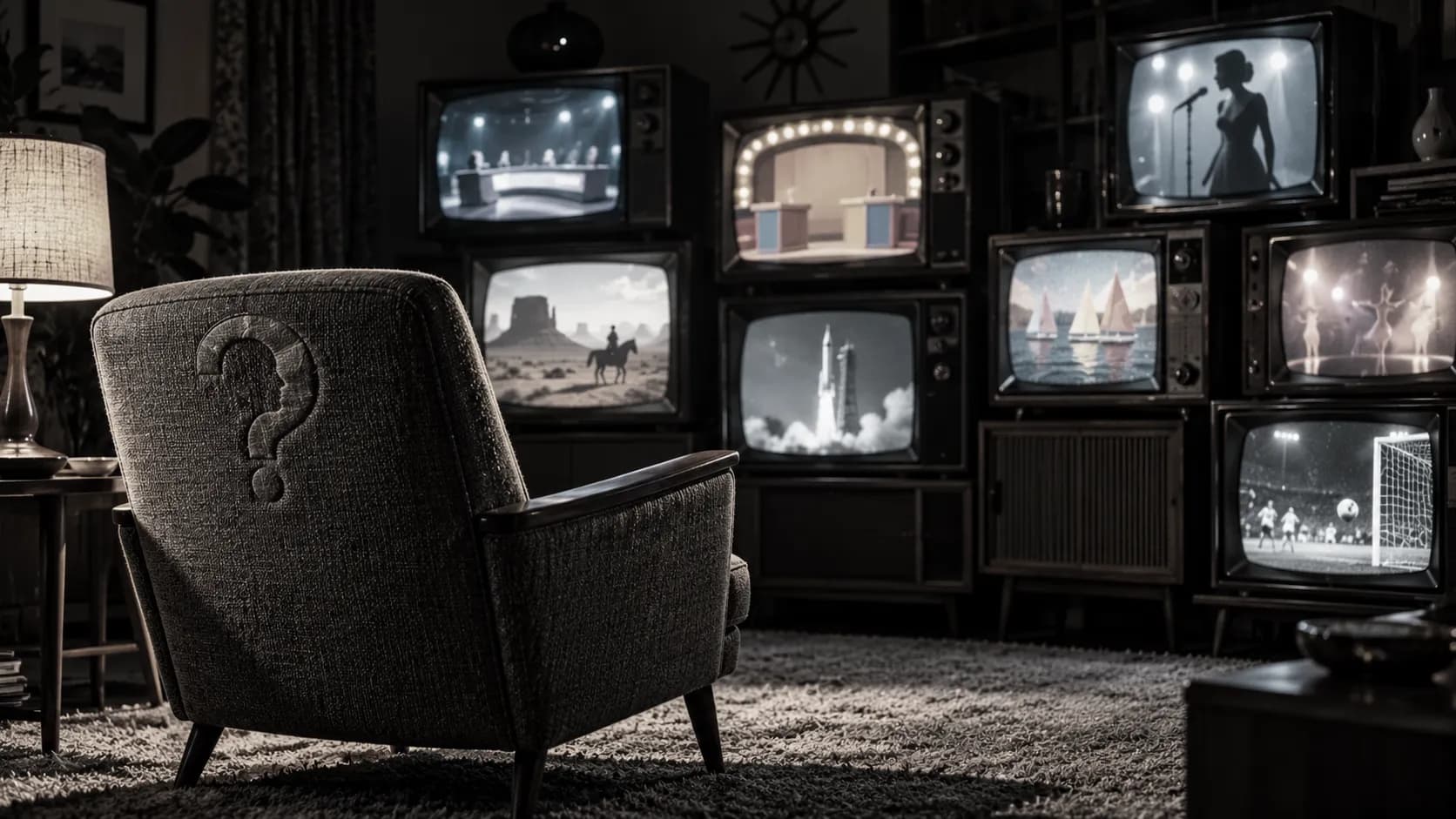
Neil Postman argued in 1985 that television turns all subject matter, news included, into entertainment. The evidence confirms that news softened and that entertainment-minded viewers drifted away from it. It points to competition and audience choice as the cause rather than the form of the screen, and the print age he set against television was less sober than his contrast needs.
Answer to the question
Was Amusing Ourselves to Death right?
Partly. Postman was right that news softened and that entertainment-minded viewers drifted away from it, as Patterson and Prior found. The evidence points to competition and audience choice, not the form of television, which also carried Murrow's See It Now and later 60 Minutes.
Key takeaways
- Postman (1985) argued that television presents all subject matter as entertaining, and held that a news broadcast is a vehicle for entertainment rather than for education or reflection.
- Patterson (2000) analysed 5,331 news stories and found soft news rose from under 35 per cent of coverage to about 50 per cent, a shift he tied to competition from cable and entertainment.
- Prior (2005) surveyed 2,358 U.S. residents and found that as media choice grew, content preference predicted political knowledge and turnout better: entertainment-minded viewers left the news.
- Baum (2002) found that foreign crises shown in entertainment-oriented soft news reached politically uninvolved Americans and narrowed the gap in attentiveness.
- Wu (2016) reports that the penny Sun's 1835 moon series lifted circulation to 19,360 and that See It Now was cancelled in 1958 for game shows and westerns, while 60 Minutes later won top ratings on the same medium.
A New York paper reported winged man-bats on the moon.
It became the most widely read newspaper in the world. More than a century later CBS cancelled See It Now, its weekly news analysis programme. Within three decades Neil Postman had published Amusing Ourselves to Death and blamed television for turning news into show business. He was right that commercial news drifted towards entertainment, and partly right about who ends up uninformed. The evidence does not support his claim that the form of television is the cause, and the print age he set against it was less sober than the contrast needs.
Postman blamed the form of the medium, not the market
Amusing Ourselves to Death argues that the form of a medium shapes what can be said through it, a position Postman put as "the medium is the metaphor". Applied to television, the complaint is about packaging rather than topics. Postman's complaint is that the trouble lies less in television offering entertaining subject matter than in all subject matter being presented as entertainment. On the news programme he was blunter: a news broadcast, he held, is a vehicle for entertainment rather than for education or reflection.
The claim has three testable parts. News should have softened, the people who watch it should know less, and the print age before television should have been the more serious one. The first is the easiest to confirm. Thomas Patterson's content analysis of 5,331 news stories, published by Harvard's Shorenstein Center in 2000, counted routine crime, accident and disaster stories and celebrity stories as soft news. As the Wilson Quarterly summarised the report, the share of such stories, over a period beginning in 1980, rose from less than 35 per cent of coverage to about 50 per cent.
His explanation is commercial. Patterson reports that outlets softened in response to competition from cable and entertainment, and that the softening did not stop the decline in news audiences: soft news and critical journalism "may now be hastening the decline in news audiences". The sample took in television, newspapers and newsmagazines, so the 50 per cent figure does not isolate the screen Postman blamed.
How media choice split the informed from the entertained
Postman's thesis in Amusing Ourselves to Death holds up best where audiences split. In a survey of 2,358 U.S. residents, Markus Prior found that content preference predicted political knowledge and turnout better as media choice grew. Viewers who preferred news became more knowledgeable and more likely to vote, and viewers who preferred entertainment turned away from news and became less informed and less likely to vote (American Journal of Political Science, 2005). The mechanism is departure rather than format: once cable and the internet offered alternatives, entertainment-minded viewers left the news instead of learning less from it.
The mechanism is departure rather than format: once cable and the internet offered alternatives, entertainment-minded viewers left the news instead of learning less from it.
Entertainment programmes also carried some politics to people who were not looking for it. In a study of foreign crises, Matthew Baum compared individual media use with attention to several recent foreign crises and found that crises presented in entertainment-oriented soft news reached politically uninvolved Americans and reduced the disparity in attentiveness between segments of the public (American Political Science Review, 2002).
Baum measured attention, not depth of understanding, which leaves Postman's point that entertainment cannot carry an argument untouched. The result does show soft news doing something his formula excludes, which is putting a foreign crisis in front of people who had not gone looking for one. The separate question of what heavy viewing does to beliefs is covered in [What Television Does to Your Beliefs](https://thewhyweproject.com/articles/what-television-does-to-your-beliefs).
A print age that already had its own man-bats
Tim Wu's The Attention Merchants (2016) dates the trade in readers' attention to the penny Sun of 1833, which lived on advertisers rather than its cover price, a model followed through to free apps in [What You Actually Pay for Free Apps](https://thewhyweproject.com/articles/what-you-actually-pay-for-free-apps). The 1835 series on lunar life that opens this piece ran in that paper, and JSTOR Daily reports that it lifted circulation to 19,360 and made the Sun the most widely read newspaper in the world.
A rival penny paper founded in 1835 built its name on violent death, and its mission statement promised readers the "freaks and vagaries" of human nature and real life. Wu's summary is that within five years the penny papers had discovered "the public's weakness for death and violence, incessant trolling, and, finally, fake news" (p. 18).
A defender of Postman can answer that the penny press was a new mass slice of print and that the argumentative press he admired sat beside it. That is fair, but print was already selling entertainment at scale a century and a half before Amusing Ourselves to Death appeared.
Print was already selling entertainment at scale a century and a half before Amusing Ourselves to Death appeared.
Murrow, the sponsor and the evening schedule of 1958
Wu also gives a case against the idea in Amusing Ourselves to Death that the screen's form rules out serious news. In 1954 See It Now took on the senator behind the Red Scare, and in Wu's reading the same screen that made Edward R. Murrow seem serene and dependable made his target "look like a monster". What ended See It Now was the schedule and the sponsor.
Alcoa, its sponsor, dropped it in 1955, saying it wanted something "perhaps fictional", and CBS sold the vacated slot to a tobacco company for a quiz show. In 1958, Wu writes, it was cancelled for good: "despite spectacular ratings by present standards, it was simply no match for the game shows or a new fad, westerns like Gunsmoke." By the late 1960s CBS had launched 60 Minutes, which Wu calls "an obvious bid to resurrect See It Now" and which showed that investigative journalism could win top ratings.
Murrow made the diagnosis himself in October 1958. He asked his audience to look at the networks' schedules from eight to eleven in the evening, the stretch examined in [Prime Time Never Died, It Started Charging Admission](https://thewhyweproject.com/articles/prime-time-charging-admission), said that "during the daily peak viewing periods" the medium "in the main insulates us from the realities of the world in which we live", and added that a sponsor of an hour's programme is "not buying merely the six minutes devoted to his commercial message".
Postman blamed the form of the screen, while Patterson, Prior and Wu each point to the market around it. Murrow said the medium can teach only as far as people are determined to use it so.
Without that, it is "merely wires and lights in a box".
Common questions
Was Amusing Ourselves to Death right?
Partly. Amusing Ourselves to Death was right about the drift: news did soften, and entertainment-minded viewers did drift away from it, as Patterson and Prior found. The evidence points at competition and audience choice, not at the form of television, which also carried Murrow and 60 Minutes.
What does Amusing Ourselves to Death argue about the news?
Postman argued that television presents all subject matter as entertainment, and that a news broadcast is a vehicle for entertainment rather than for education or reflection. His book is subtitled Public Discourse in the Age of Show Business.
How much of the news is soft news?
In Patterson's 2000 analysis of 5,331 stories, as summarised by the Wilson Quarterly, soft news rose from less than 35 per cent of coverage to about 50 per cent. He counted routine crime, accident, disaster and celebrity stories as soft, across television, newspapers and newsmagazines.
Did Amusing Ourselves to Death describe a real print golden age?
Wu's history suggests the contrast was overdrawn. The penny Sun printed its moon series in 1835, and Wu says the penny papers found a public weakness for death, violence and fake news within five years.
Sources
Postman, N. (1985). Amusing Ourselves to Death: Public Discourse in the Age of Show Business. Viking Penguin.
Patterson, T. E. (2000). 'Doing Well and Doing Good: How Soft News and Critical Journalism Are Shrinking the News Audience.' Shorenstein Center, Harvard Kennedy School. https://shorensteincenter.org/how-soft-news-critical-journalism-are-shrinking-news-audience/
Wilson Quarterly. 'News You Can Lose' (summary of Patterson 2000). https://www.wilsonquarterly.com/quarterly/undefined/news-you-can-lose
Prior, M. (2005). 'News vs. Entertainment: How Increasing Media Choice Widens Gaps in Political Knowledge and Turnout.' American Journal of Political Science, 49(3), 577-592. doi:10.1111/j.1540-5907.2005.00143.x
Baum, M. A. (2002). 'Sex, Lies, and War: How Soft News Brings Foreign Policy to the Inattentive Public.' American Political Science Review, 96(1), 91-109.
Wu, T. (2016). The Attention Merchants: The Epic Struggle to Get Inside Our Heads. Knopf (Atlantic Books paperback, 2017).
Murrow, E. R. (1958). 'Speech of October 1958 on radio and television.' Reprinted in Columbia Journalism Review, Summer 1965. https://www.cjr.org/60th/edward-r-murrow-indictment-of-broadcasting.php